
Berry identification starts with checking the whole plant, not only the fruit. To identify berries more safely, compare color, shape, size, surface texture, fruit structure, leaf shape, stem type, thorns, clusters, and habitat.
In this guide, “berries” means berry-like fruits as they are commonly recognized in the field, including some fruits that are not true botanical berries. A red, black, or purple berry can belong to an edible plant, an ornamental shrub, or a poisonous species, so color alone is never enough.
Safety warning: never eat wild berries unless you are completely certain of the exact species, the edible plant part, the ripeness stage, and whether preparation is required.
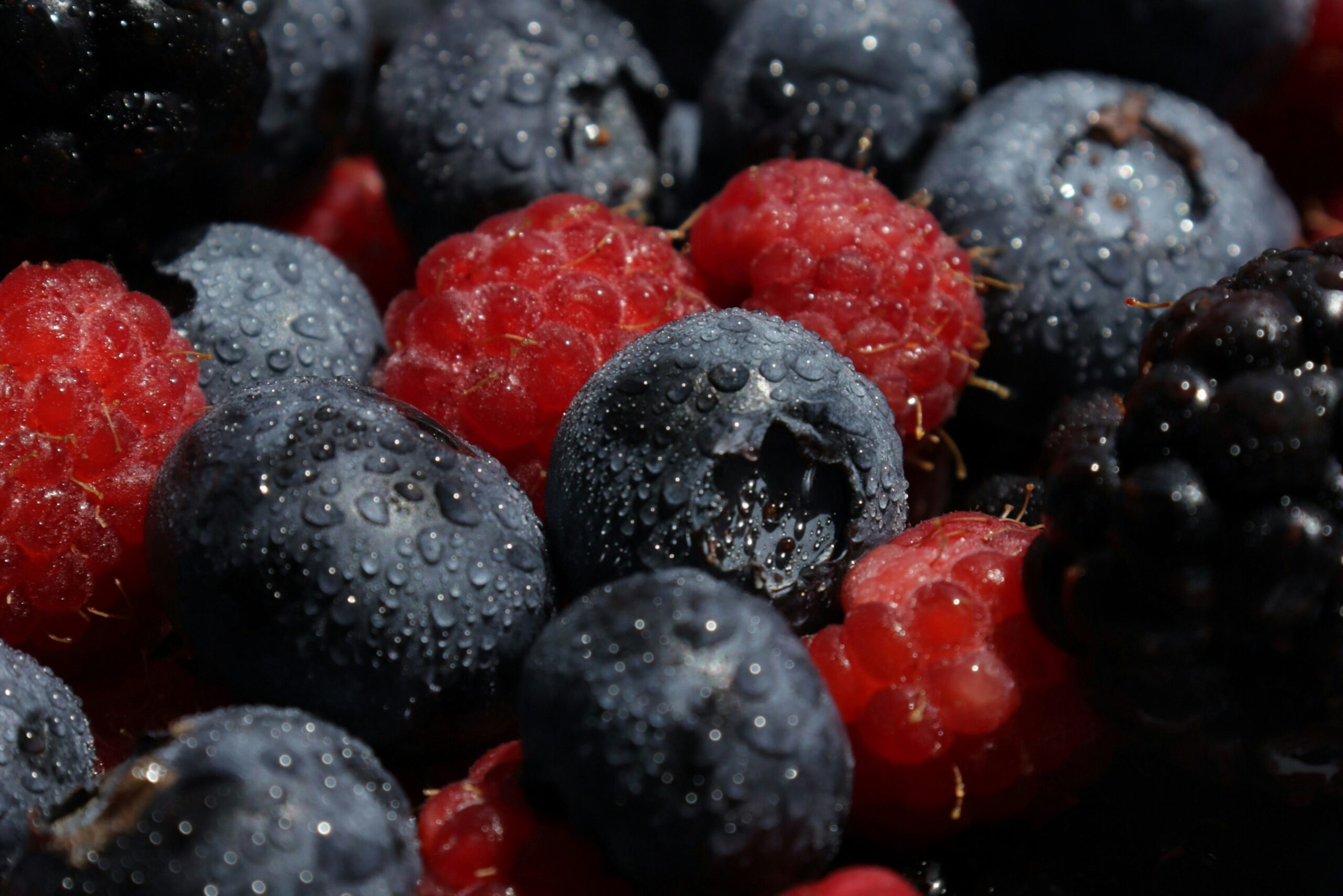
How to Identify Berries
A reliable berry identification guide uses several visible features at the same time. Many berries change color as they ripen, and many unrelated plants produce fruits that look similar. Before using a berry identifier or making a berry id from a photo, examine the fruit and the plant together.
Key features to check:
- Fruit color: red, black, blue, purple, orange, white, green, or translucent.
- Fruit shape: round, oval, elongated, flattened, clustered, or aggregate.
- Fruit size: tiny, pea-sized, grape-sized, or larger.
- Surface texture: glossy, dull, waxy, powdery, hairy, veined, or smooth.
- Fruit structure: single berry, paired berry, bunch, hanging cluster, or aggregate fruit.
- Leaves: simple or compound, opposite or alternate, toothed, lobed, smooth, or hairy.
- Stems: woody shrub, cane, vine, small tree, herbaceous stem, or thorny branch.
- Habitat: woodland edge, wetland, meadow, roadside, hedge, garden, or forest understory.
For accurate berry plant identification, use at least three or four traits together. A single feature rarely confirms a species. When possible, compare your observation with trusted resources such as the USDA PLANTS Database or a regional extension service.
Identify Berries by Color, Shape and Surface
Color is only the first clue in berry identification. To identify berries more accurately, compare color with shape, size, surface texture, fruit structure, and how the berries grow on the plant. Two berries can have the same color but belong to completely different species.
Check these fruit features first:
- Shape: round, oval, elongated, flattened, or irregular.
- Size: smaller than a pea, pea-sized, grape-sized, or larger.
- Surface: glossy, matte, waxy, powdery, hairy, smooth, or veined.
- Structure: single berry, paired berry, aggregate fruit, bunch, or cluster.
- Attachment: on short stalks, long stems, vines, canes, or branches.
- Ripening pattern: all fruits the same color, or green, red, and dark berries on one plant.
Red Berries
Red berries are common on trees, bushes, vines, and herbaceous plants. Small red berries can be difficult to identify because many edible, ornamental, and toxic plants produce them. Look at the fruit shape, cluster type, leaf form, stem texture, and whether the plant is a shrub, tree, vine, or soft-stemmed plant.
A bush with red berries identification may involve currants, hollies, hawthorns, viburnums, or other regional species. Red berry tree identification may involve holly, hawthorn, rowan, crabapple, or other fruiting trees and tree-like shrubs. Exact identification is essential before considering any use.
Dark Berries
Dark berries include black, blue-black, and very deep purple fruits. Some are edible when correctly identified, such as blackberries, blueberries, mulberries, and some raspberries, but others can be unsafe. Check whether the fruit is smooth, segmented, waxy, or clustered.
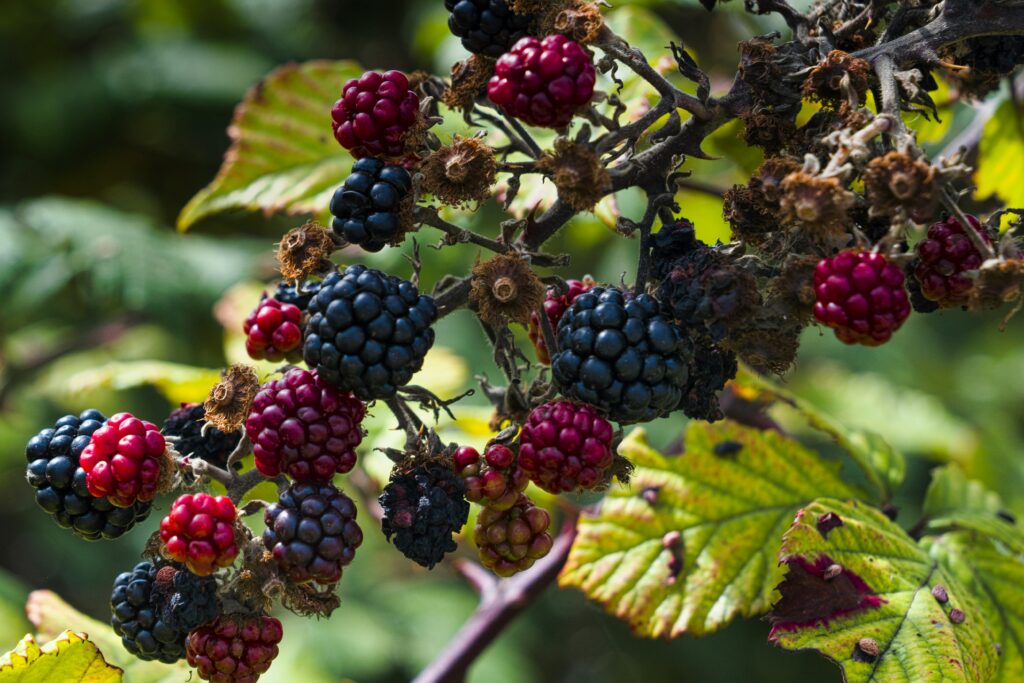
For example, blackberries are aggregate fruits made of many small drupelets and usually grow on canes, often with prickles. Many blueberries have a pale waxy bloom and a small crown at the blossom end, but these traits must be confirmed with leaves, shrub form, and habitat. Elderberries are small and grow in broad clusters on woody shrubs or small trees. Only correctly identified, ripe elderberries are used in prepared forms; raw berries and other plant parts may cause illness.
Purple Berries
Purple berries may grow on shrubs, trees, vines, or herbaceous plants. Their color can overlap with black, blue, or red depending on ripeness. To identify them, check whether the fruits grow in bunches, drooping clusters, flat clusters, or single berries.
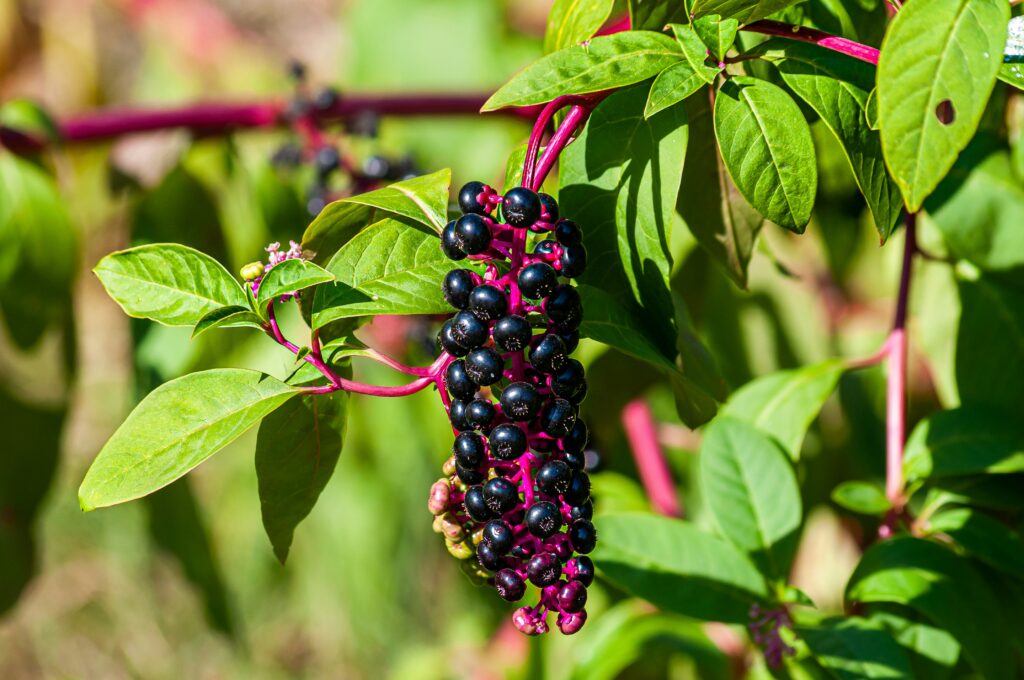
Purple berry tree identification may involve mulberries, serviceberries, or other regional species. Some toxic plants also produce dark purple berries, including pokeweed, which has drooping clusters and thick reddish stems. Always compare the leaves, stems, habitat, and overall plant type before making a berry id.
Identifying Berries on Trees and Bushes
Many people search for berries that grow on trees after noticing fruit on branches in parks, gardens, or woodland edges. A berry tree may produce red, orange, black, blue, or purple berry-like fruits, but not all tree berries are edible.
Trees with berries or berry-like fruits may include serviceberry, mulberry, hawthorn, rowan, holly, dogwood, and other regional species. To identify berries from trees, check the bark, leaf shape, fruit cluster, branch structure, thorns, and season. A tree with red berries may be ornamental, edible only with exact identification, or toxic.
Berry bush identification follows the same principle. Shrubs with berries identification should include leaf edges, stem texture, growth height, evergreen or deciduous habit, thorns, and fruit placement. Red berries on bush plants may look attractive, but they should never be tasted without complete identification. Orange berry bush identification also requires caution because bright fruits are common in ornamental shrubs.
| Plant type | Berry appearance | What to check | Safety note |
| Holly | Bright red berries | Evergreen leaves, shrub or tree form | Toxic to humans |
| Hawthorn | Red fruits on thorny branches | Thorns, lobed leaves, tree or shrub habit | Confirm species |
| Currant | Small red, black, or white berries | Hanging clusters, shrub form | Confirm species |
| Mulberry | Dark berry-like fruits | Tree form, leaf shape | Confirm species |
| Wild grape | Dark fruits in bunches | Woody vine, tendrils | Avoid toxic look-alikes |
How to Identify Wild Berries
To identify wild berries, combine physical traits with habitat. Wild berry identification is more reliable when you record where the plant grows and what surrounds it. Some berry-producing plants prefer wet soil, some grow along woodland edges, and others appear in open fields, acidic soils, hedgerows, or disturbed roadsides.
Use this process when identifying wild berries:
- Photograph the whole plant, not only the fruit.
- Take close-up photos of berries, leaves, stems, flowers, bark, thorns, and clusters.
- Note the habitat, date, and location.
- Check whether the plant is a tree, shrub, vine, cane, or herb.
- Compare the plant with several trusted regional sources.
- Do not eat the berries unless identification is complete and certain.
A berry identifier can help narrow possibilities, but it should not be the only source used for edible decisions.
How to Tell Similar Berries Apart
Many berries look alike, especially when ripe. The safest method is to compare the whole plant, not only the fruit.
| Similar berries | Key difference | What to check |
| Blackberry vs. black raspberry | Blackberry keeps the central core; black raspberry is often hollow when picked | Cane type, prickles, leaves, fruit structure |
| Blueberry vs. toxic dark berries | Blueberries often have a waxy bloom and small crown | Shrub form, leaves, habitat |
| Elderberry vs. pokeweed | Elderberry grows on woody shrubs; pokeweed has thick reddish stems | Cluster shape, stem texture, plant structure |
| Wild grape vs. toxic vine berries | Wild grapes grow in bunches on woody vines with tendrils | Tendrils, leaf shape, fruit bunches |
| Currant vs. ornamental red berries | Currants often hang in small clusters | Leaf shape, shrub habit, regional species |
If one important feature does not match, treat the plant as unidentified.
Poison Berry Identification Chart
A poison berry identification chart can help highlight common risks, but it is not a complete safety tool. Toxic species vary by region, and some poisonous plants produce berries that look attractive or similar to edible fruits.
| Plant or group | Berry appearance | Main concern |
| Pokeweed | Dark purple-black berries in drooping clusters | Toxic; unsafe for casual foraging |
| Bittersweet nightshade | Shiny red oval berries | Toxic, especially risky for children |
| Deadly nightshade | Dark, shiny berries | Highly toxic |
| Lily-of-the-valley | Small red berries | Toxic ornamental plant |
| Holly | Bright red berries on evergreen shrubs or trees | Toxic to humans if eaten |
| Yew | Red fleshy aril surrounding a hard seed | The seed and foliage are highly toxic; never eat yew fruits |
Do not rely on this table alone. If you cannot confirm the exact species, do not taste or consume the berries. Avoid handling damaged plant material, and wash your hands after touching unknown plants.
Safe Tips for Identifying Wild Berries
Safe identifying wild berries means slowing down and checking multiple features. Never use taste as an identification method, and do not assume that berries eaten by birds or animals are safe for people.
Follow these safety tips:
- Do not eat wild berries without full species-level identification.
- Avoid berries from roadsides, polluted areas, sprayed landscapes, or unknown garden plants.
- Keep children and pets away from unfamiliar berries.
- Use regional field guides, local extension services, botanical gardens, or expert sources.
- Check the plant at different stages if possible: flowers, unripe fruit, ripe fruit, and leaves.
- Be cautious with look-alikes, especially red berries, dark berries, and vine-grown berries.
- When in doubt, leave the berries alone.
FAQ
How can I identify a berry by its appearance?
Start by checking the berry’s color, shape, size, surface texture, and cluster pattern. Then compare the leaves, stems, thorns, plant type, and habitat. Appearance can narrow the options, but it should not be used as the only basis for edible berry identification.
What berries commonly grow on trees?
Berry-like fruits that commonly grow on trees or tree-like shrubs include serviceberries, mulberries, hawthorn fruits, rowan berries, holly berries, and some dogwoods. Some are edible only with exact identification, while others, such as holly berries, are toxic to humans.
How can I tell if a wild berry is poisonous?
You cannot reliably tell if a wild berry is poisonous by color, taste, or appearance alone. Use a poison berry identification chart only as a warning tool, then confirm the whole plant with trusted regional sources. If you are not completely certain of the species, do not taste or eat the berries.
Explore More Plant Identification Guides
Discover the Latest Blog Posts
- Top 12 South Africa Plants: Native Flowers, Trees, and Succulents to Know
 South Africa is one of the world’s most exciting places for plant diversity. From fynbos-covered mountains to dry savannas, coastal … Read more
 - Best Trees for Landscaping
 Trees are important elements of garden design. In addition to a natural accent or background to other plants, they provide … Read more
 - 12 Best Summer Flowers For Your Garden
 A garden that loses its vibrant colors by July can be a disappointment. The secret is choosing plants that thrive … Read more