
Mushrooms are among the most difficult living organisms in the kingdom Fungi to identify. After all, most species are similar to one another, and while wandering through the forest, you might come across a poisonous look-alike. To prevent serious poisoning, you should identify a mushroom correctly.
In this guide, you’ll find out how mushroom identification works by focusing on visible features such as cap shape, underside structure, stem, spore print, and habitat. This page is designed to help you understand what to observe, how to compare similar species, and how to build stronger identification skills through morphology and ecology.
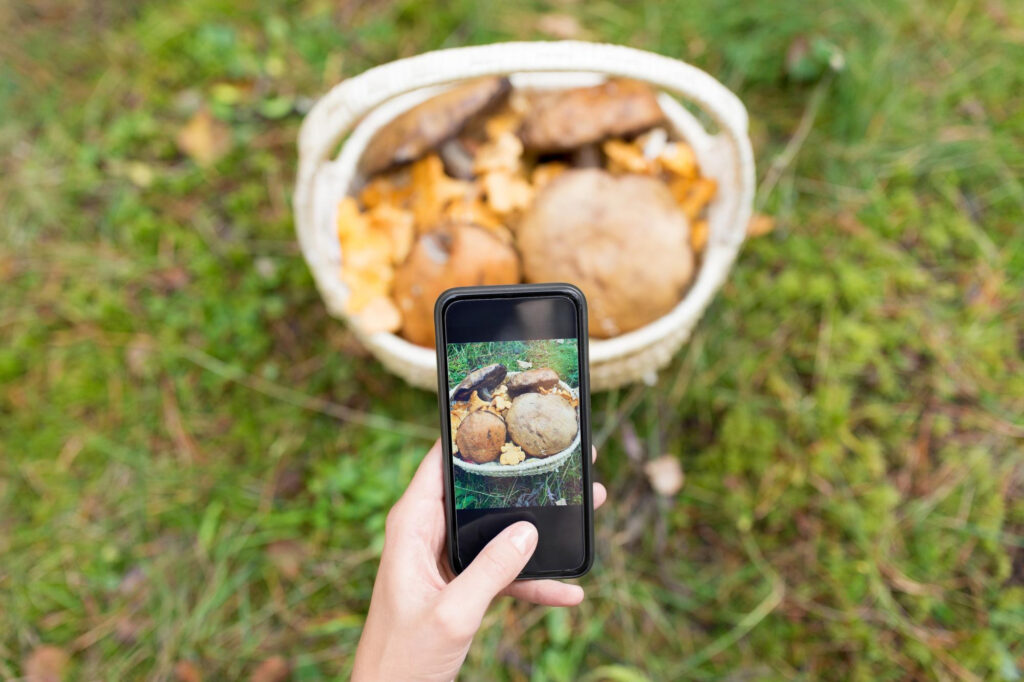
How to Determine a Mushroom: Step-by-Step Approach
For correct mushroom identification, make careful observations, since live organisms can typically change their color, shape, and texture as they mature. So, to receive accurate results, keep in mind several characteristics together.
A reliable process includes examining the overall appearance of the mushroom, comparing key visible traits before narrowing down the possible species, and recording where the fungi grow.
Step 1: Observe the Overall Form
When examining the unfamiliar mushroom, pay attention to its general form. Is it umbrella-shaped, shelf-like, cup-shaped, coral-like, puffball-like, or clustered in overlapping layers? Its overall appearance can help you quickly narrow it down to the possible group.
Step 2: Examine the Mushroom’s Key Characteristics
The next step is to identify mushrooms by their detailed structure. Look carefully at the cap surface, underside, stem, base, color, and texture. The underside is especially important because mushrooms may have pores, folds, gills, teeth, or a smooth spore-bearing surface.
A spore print is also a significant feature that can help confirm identification by showing the color of its mature spores, such as white, brown, or another color.
Step 3: Pay Attention to the Growing Environment
Habitat is one of the strongest clues that can help you identify the mushroom. Record where exactly the live organism grows, whether it is in soil, grass, moss, a living tree, or a dead log. Climate, elevation, and geographic range also matter.
A species that appears in a wet temperate forest may belong to a different group than a similar-looking species found in dry grassland or tropical woodland.
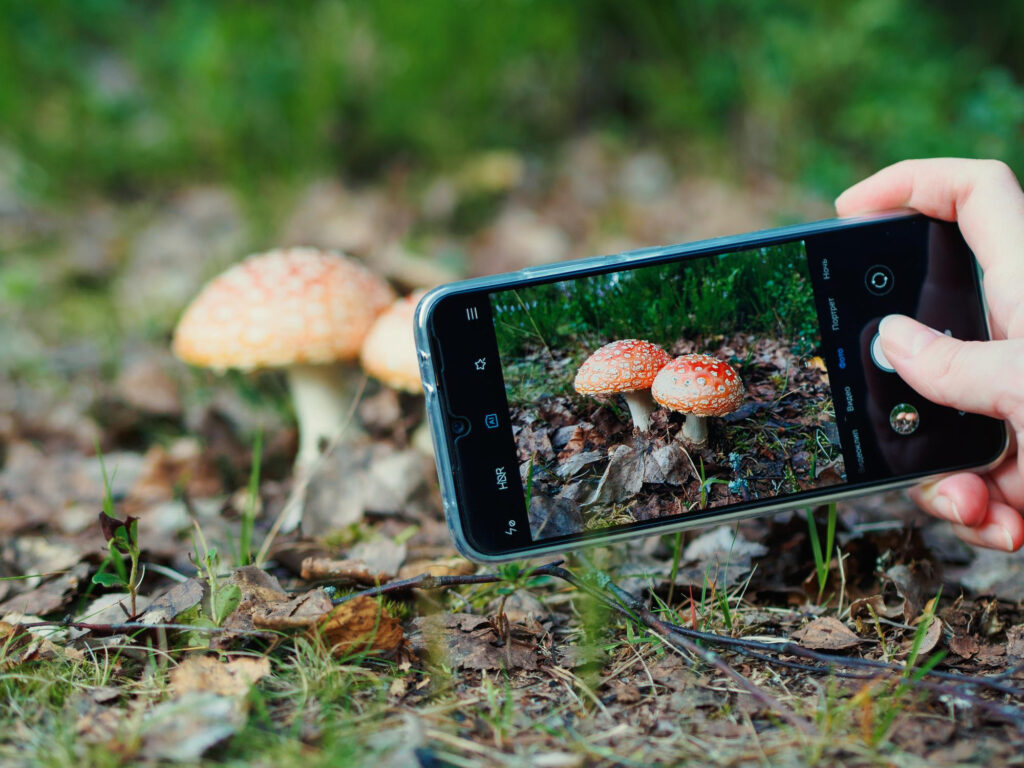
5 Key Characteristics to Identify Mushrooms
When learning how to identify a mushroom, keep in mind one significant tip that professional harvesters use: combine analysis of several traits. Separate features may be important for certain groups, but combining all key characteristics together at the same time may provide you with the most accurate result.
The table below contains 5 significant visual characteristics for correct mushroom identification.
| Identification Characteristic | What to Examine | Why It Matters |
| Cap Shape and Surface | Cap shape, diameter, color, surface texture, margin, moisture. | Helps narrow down the group and shows how the specimen has changed with age. |
| Underside Structure | Type of underside: pores, gills, teeth, ridges, folds. Also examine its spacing and attachment to the stem. | One of the most important features for narrowing identification. |
| Spore Print | Spore color that is visible on the underside of the cap. | Helps confirm the identification of mushrooms with a similar external appearance. |
| Stem and Base | Stem thickness, length, color, texture, ring, volva, and rooting base. | Useful for distinguishing species that look similar. |
| Habitat | Growing surface: soil, grass, wood, or moss. | Many species are associated with specific substrates, tree species, or habitats. |
Common Botanical Features of Mushrooms
When asking “What is mushroom identification?” also keep in mind the common botanical features of this group of organisms. Many mushrooms have a cap, a stem, and a fertile underside where spores are produced.
However, not all species are found in nature with the indicated features. For example, coral fungi are branched and coral-like, puffballs don’t have a distinct cap and stem, and stinkhorns are elongated with a netted surface.
Common mushroom traits to keep in mind:
- A visible fruiting body that appears when moisture, temperature, and other conditions are suitable.
- Reproduction through spores rather than seeds.
- Growth from a mycelium hidden in a particular substrate, such as soil, living trees, decaying wood, or organic material.
- Key roles as decomposers, tree partners, or parasites.
These characteristics distinguish this group of organisms from true plants. They do not have leaves, flowers, roots, or chlorophyll, so their identification relies on fungal anatomy rather than traditional botanical features.
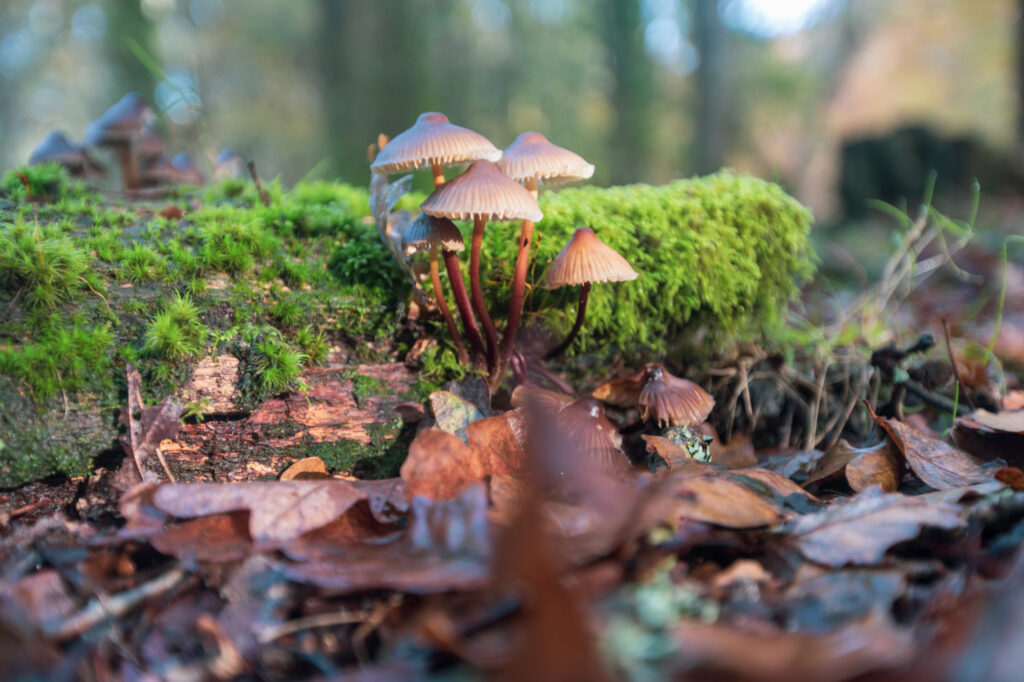
How to Identify Mushrooms Accurately: Practical Tips
For accurate identification, conduct complete observation by following these practical tips:
- Photograph the mushroom in its natural position without touching or moving it.
- Write down the location, season, habitat, and substrate on which it is growing.
- Examine the cap, underside, stem, and base.
- Check for a ring, veil remnants, and volva, as well as whether the mushroom bruises, releases latex, has a noticeable odor, or feels smooth, slimy, dry, or scaly.
- Compare young and old specimens when available.
- Make a spore print when the underside features are not enough.
- Avoid relying on color alone, because it often changes with age and weather.
We don’t recommend relying 100% on these tips to decide whether a mushroom is edible. It’s essential to contact an expert for more accurate identification before making a consumption decision.
Popular Mushrooms Around the World
Knowledge of biogeographic distribution is a valuable clue when identifying mushrooms. Many species are found in specific forest types, soil conditions, or geographic regions.
Considering the natural range, climate, and ecosystem can eliminate the species that do not grow in a particular area and narrow down the search to the possible group.
In the table below, you can familiarize yourself with widely recognized mushrooms from different parts of the world.
| Region | Common Mushrooms and Mushroom Groups | Typical Habitats and Substrates |
| North America | Morels, chanterelles, turkey tail, oyster mushrooms. | Deciduous, mixed, and coniferous forests, grasslands, living or decaying wood. |
| South America | Tropical polypores, cup fungi, and Favolashia species. | Tropical rainforests, cloud forests, and decaying wood. |
| Europe | Fly agaric, porcini, chanterelles, honey mushrooms, and field mushrooms. | Deciduous, coniferous, and mixed forests; meadows, stumps, parks. |
| Asia | Shiitake, reishi, straw mushrooms, and wood ear mushrooms. | Temperate and tropical forests, hardwood logs, decaying wood, and plant-based substrates such as rice straw. |
| Africa | Termitomyces species, bracket fungi, puffballs. | Tropical forests, savannas, decaying wood, grasslands, and termite-associated habitats. |
| Australia & Oceania | Ghost fungus, native boletes, bracket fungi, and coral fungi. | Eucalyptus forests, temperate rainforests, bushlands, coastal woodlands, and rotting wood. |
FAQ
What is the easiest way to identify a mushroom?
Simply observe the full mushroom, paying attention to its cap, underside, stem, base, print color, and habitat.
Can I identify a mushroom from a photo?
A picture with a live organism can be useful, but only if it is clear. This means that when taking photos, capture all parts, including the cap, underside, stem, base, surrounding habitat, and the place.
What is a spore print?
This is the pattern and color left when spores fall from the underside of fungi onto paper, glass, or another surface.
Explore More Plant Identification Guides
Discover the Latest Blog Posts
- Lemon Tree Care: 6 Tips for Growing a Healthy Tree
 Lemon tree care is easier when you focus on six basics: strong light, consistent watering, fast-draining soil, suitable temperatures, regular … Read more
 - Top 12 South Africa Plants: Native Flowers, Trees, and Succulents to Know
 South Africa is one of the world’s most exciting places for plant diversity. From fynbos-covered mountains to dry savannas, coastal … Read more
 - Best Trees for Landscaping
 Trees are important elements of garden design. In addition to a natural accent or background to other plants, they provide … Read more
 - 12 Best Summer Flowers For Your Garden
 A garden that loses its vibrant colors by July can be a disappointment. The secret is choosing plants that thrive … Read more