
On the one hand, cacti seem to be one of the most recognizable groups. On the other hand, it includes 1,800+ species, from the 40-foot saguaro to a golf ball-sized mammillaria, and that diversity can seem overwhelming.
Here, you’ll learn to identify cacti fast and accurately. We’ll explain how to recognize a cactus down to the right species based on areoles, spine arrangement, rib structure, growth form, flowers, and habitat.
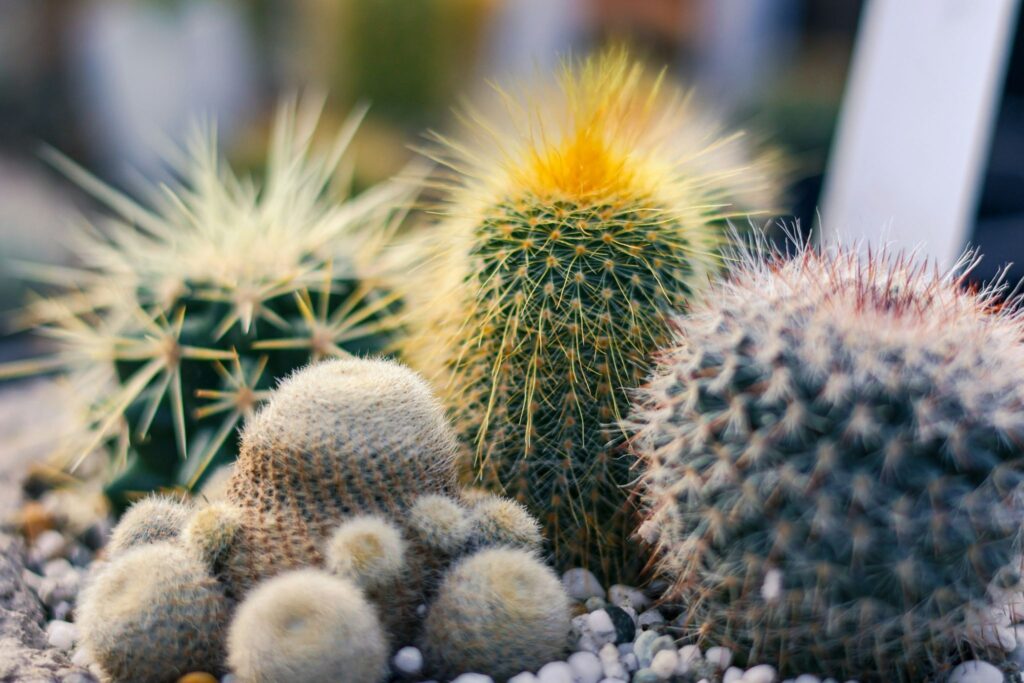
How Cactus Identification Works: A Step-by-Step Approach
When you see a new plant, there’s a temptation to focus on a standout feature and try to match it to a picture. However, that rarely works.
Cacti identification is a sequential analysis of key features. Growth form tells you the genus, spines and stem structure separate the species, and habitat is the final confirmation. If you follow this order, that becomes the actual ID process, not just guesswork.
1. Ensure It’s a True Cactus
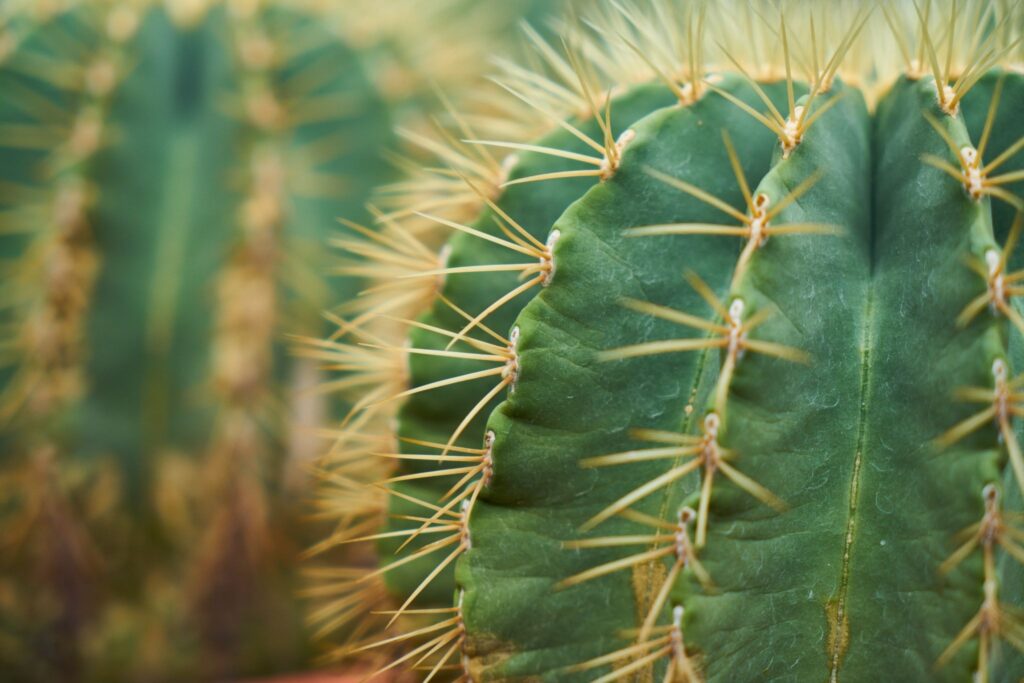
First, you need to confirm you’re looking at a cactus at all. The only feature that guarantees it is the areole: a small, cushion-like bump from which spines, flowers, and new growth all emerge. No other plant family has them.
On some specimens, especially older or weathered ones, areoles can be subtle, so look closely at the base of each spine cluster. Also, you can try to detach a spine. On a true cactus, it detaches cleanly from the areole, leaving the bump intact. On euphorbias and other look-alikes, spines scar directly into the skin.
2. Evaluate the Overall Growth Form
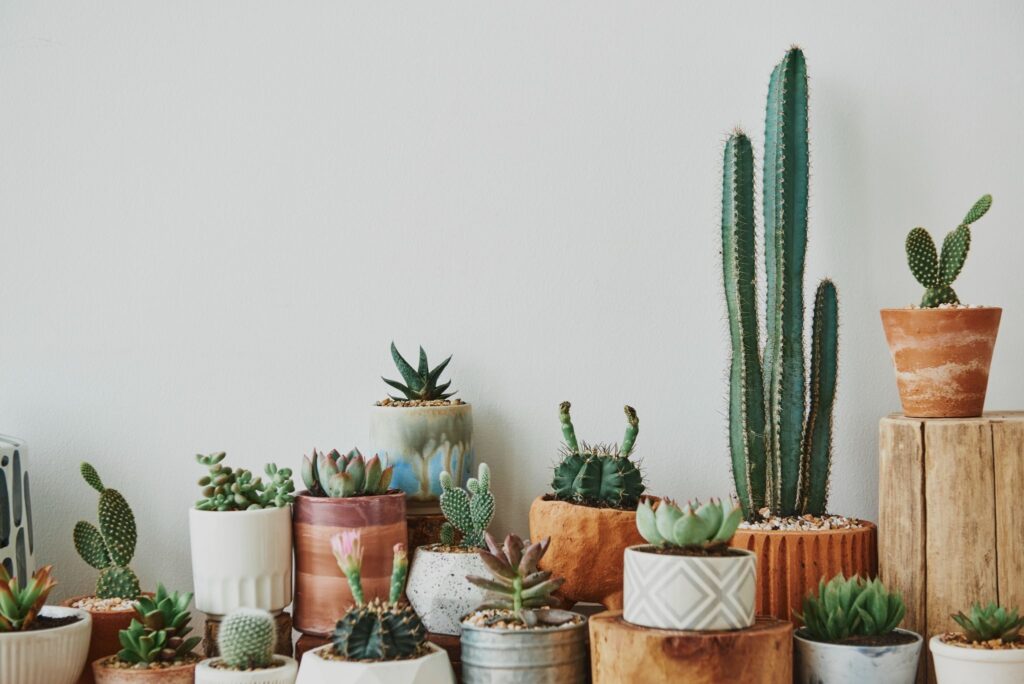
Most advice on how to identify cacti points you straight to the spines. In reality, growth form analysis should come first, and here are the types you may encounter:
- Columnar — upright, single or branching stems, as seen in saguaro, organ pipe, and San Pedro cactus.
- Globular and barrel — compact, round to squat body with prominent ribs like Golden barrel and fishhook barrel cactus.
- Pad-forming — flat or cylindrical jointed segments like prickly pear and cholla.
- Clustering — multiple small stems rising from a shared base like hedgehog and pincushion cactus.
- Epiphytic — grows anchored to trees rather than in soil, like Christmas, Easter, and orchid cactus.
Growth form won’t give you the species, but it immediately eliminates most of the family and puts you in the right group.
3. Work Through the Spines
Learning to identify cacti by spines and shape can take you closer to the species. Here are the key spine characteristics to consider:
- Type and arrangement. There are long, thick central spines that emerge from the middle of the areole. There are also shorter, more numerous radial spines that fan outward from the edge.
- Shape. Straight and needle-like is the most common form across the family. Hooked spines are typical of fishhook barrel cactus and some pincushion cacti. Long, hair-like spines covering the entire stem are characteristic of old man cactus. Tiny barbed bristles called glochids, found in prickly pears and chollas, are a group-level identifier on their own.
- Count per areole. The range is wide. For example, pincushion cacti like Mammillaria commonly carry 15-30 fine radial spines per areole, while San Pedro typically has just 3-7. Star cactus sits at the other extreme, carrying no spines at all.
Spine color can help, but treat it as a secondary clue. It shifts with age and growing conditions, making it unreliable on its own.
4. Check the Stem Structure
Now, look at the stem itself. Check whether it has ribs — vertical ridges running along the length of the stem. Also check for tubercles — individual, nipple-like bumps arranged in spirals, each carrying its own areole at the tip.
5. Use Habitat and Range to Confirm the ID Result
By this point you should have a short list of candidates. Habitat and geographic range are what help you choose between them, as most cactus species are native to specific regions and ecosystems.
A plant growing in the Sonoran Desert of Arizona is working from a completely different species pool than one found in the cloud forests of Brazil.
7 Key Characteristics to Identify Cacti
What is cacti identification at its most precise? It’s a structured analysis of several morphological features examined together, so let’s take a look at the key ones:
| Characteristic | What to Examine | What It Reveals |
| Areoles | Presence, position, spacing, and wool texture | Confirms a cactus, supports genus-level ID |
| Growth Form | Overall shape: columnar, globular, pad-forming, clustering, or epiphytic | Narrows the genus |
| Stem Structure | Ribs vs. tubercles; stem color and texture | Confirms genus, flags juvenile vs. adult differences |
| Spines | Type (central vs. radial), count per areole, shape, color | Most reliable feature for species-level ID |
| Flowers | Color, position on stem (crown or sides), size, and bloom time | Species-level confirmation |
| Fruits | Berry shape, color, and whether the surface carries areoles | Supports species and genus ID |
| Habitat & Range | Ecosystem, elevation, soil type, and native geographic region | Narrows candidates; confirms final ID |
No single row in this table gives you a complete answer on its own. The more characteristics you can check, the more reliable your identification becomes.
Unique Traits That Define Cacti as a Family
Cacti share a set of botanical features that set them apart from every other plant family:
- Stems do the work leaves normally would. In most cacti, true leaves are absent or reduced to scales. Up to 90% of a cactus’s fresh weight can be water held in the fleshy stem tissue.
- Ribs and tubercles allow the stem to expand and contract. After rain, the stem swells to store water. During drought, it shrinks.
- Areoles are present on every true cactus. No other plant family has them.
- Flowers emerge directly from areoles. They are typically large, showy, and solitary, appearing at the crown or along the sides.
- Fruits are typically fleshy berries. The fruit surface is also covered with areoles.
- Root systems are shallow but wide-spreading. That’s how they capture rainfall quickly.
When you understand what these features are for, you can identify cacti much more easily.
Practical Tips for Accurate Identification
Identification errors usually come from rushing the process or overlooking something simple. Here are some tips on how to avoid them:
- Photograph before you research, and try to take shots from multiple angles for further analysis.
- Scratch the stem to quickly distinguish euphorbia look-alikes (they exude a milky white latex sap, while true cacti don’t).
- Don’t trust nursery labels. Treat them as a starting point.
- Wait for flowers if you can and consider the color, position on the stem, and bloom time.
- Look at more than one specimen. Check several plants of the same apparent type before committing to an ID.
- Be cautious with cultivated specimens. Hybrids usually have an unusual appearance.
The goal isn’t a perfect ID on the first attempt. It’s ruling out enough possibilities that you’re left with one or two candidates you can verify properly.
Where Cacti Grow: Species Across the Americas and Beyond
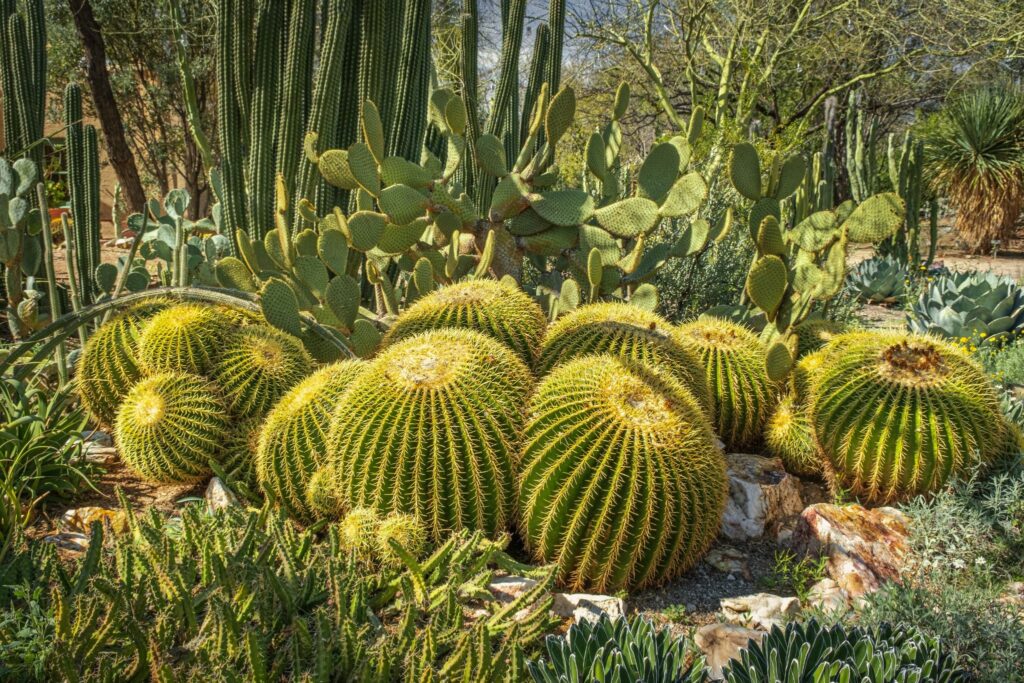
The family is almost exclusively native to the Americas. Mexico has the greatest cactus diversity of any country in the world, with the Sonoran Desert region alone hosting around 300 species.
If you know where a plant is growing, you can rule out the majority of the family. And it matters: 31% of the species are currently threatened with extinction, making ID important beyond simple curiosity.
Here are some of the most common cacti you’re likely to encounter across different regions:
| Region | Common Cacti | Typical Habitat |
| North America (USA) | Saguaro, golden barrel, prickly pear, cholla, organ pipe | Sonoran, Chihuahuan, and Mojave deserts |
| Mexico & Central America | Prickly pear, mammillaria, barrel cactus, night-blooming cereus | Deserts, dry tropical forests, rocky highlands |
| Canada | Prickly pear, ball cactus | Dry prairies, rocky hillsides, sandy slopes |
| Caribbean | Turk’s cap, prickly pear, tree cactus | Coastal scrub, dry limestone hills |
| Galápagos Islands | Galápagos prickly pear, lava cactus, candelabra cactus | Volcanic rocky terrain, arid lowlands |
| South America (Andes) | San Pedro, old man of the Andes, silver torch | High-altitude slopes, rocky outcrops |
| Brazil | Christmas cactus, golden ball, melocactus | Atlantic rainforest, caatinga, campo rupestre |
| Southern South America | Cereus, prickly pear, Copiapoa | Patagonian steppe, dry Andean slopes |
| Africa & Indian Ocean Islands | Rhipsalis baccifera | Tropical forest understory |
If you encounter a cactus growing wild outside the Americas, it’s almost certainly either Rhipsalis baccifera or an introduced species that has naturalized in a new region.
FAQ
What’s the difference between a cactus and a succulent?
Succulent describes any water-storing plant, such as aloes, agaves, and euphorbias. Cacti are a specific family within that group, distinguished by areoles: small, cushion-like structures.
How do I know if a spiny plant is actually a cactus?
Look for areoles (small, often woolly bumps) at the base of each spine cluster. If you’re still unsure, scratch the stem lightly: euphorbias exude milky white sap, while true cacti don’t.
Can I identify a cactus just by its spines?
Not reliably. Spine color shifts with age, and count varies between specimens of the same species. Spines work best when combined with growth form, stem structure, and habitat.
Why does my cactus look nothing like photos of the same species online?
Age, growing conditions, and hybridization all cause significant variation. Online photos, in turn, typically show ideal or mature specimens.
How do I use flowers to identify cacti?
Check position, color, and bloom time. Night-blooming white flowers point to Cereus and certain echinopsis species, while day-blooming red or yellow flowers suggest different groups entirely.
Explore More Plant Identification Guides

Discover the Latest Blog Posts
- Lemon Tree Care: 6 Tips for Growing a Healthy Tree
 Lemon tree care is easier when you focus on six basics: strong light, consistent watering, fast-draining soil, suitable temperatures, regular … Read more
 - Top 12 South Africa Plants: Native Flowers, Trees, and Succulents to Know
 South Africa is one of the world’s most exciting places for plant diversity. From fynbos-covered mountains to dry savannas, coastal … Read more
 - Best Trees for Landscaping
 Trees are important elements of garden design. In addition to a natural accent or background to other plants, they provide … Read more
 - 12 Best Summer Flowers For Your Garden
 A garden that loses its vibrant colors by July can be a disappointment. The secret is choosing plants that thrive … Read more