
Succulents attract people with their unique shapes and thick, juicy leaves. However, two plants can look almost similar but actually be different species. A little succulent identification makes this clear. In this guide, you will find the characteristics that help you distinguish these plants from each other. You’ll learn what to check first and which features are truly important.
How to Identify Succulents Step by Step
Every good identification begins with a careful inspection. First, you look at the basic elements, then delve into the details. So, what is succulent identification actually? This simply means you carefully examine the plant and match it to a known species.
If you rush, you’ll miss important details. Follow the step-by-step instructions below to know how to recognize a correct species ID.
Start With the Plant’s Whole Shape
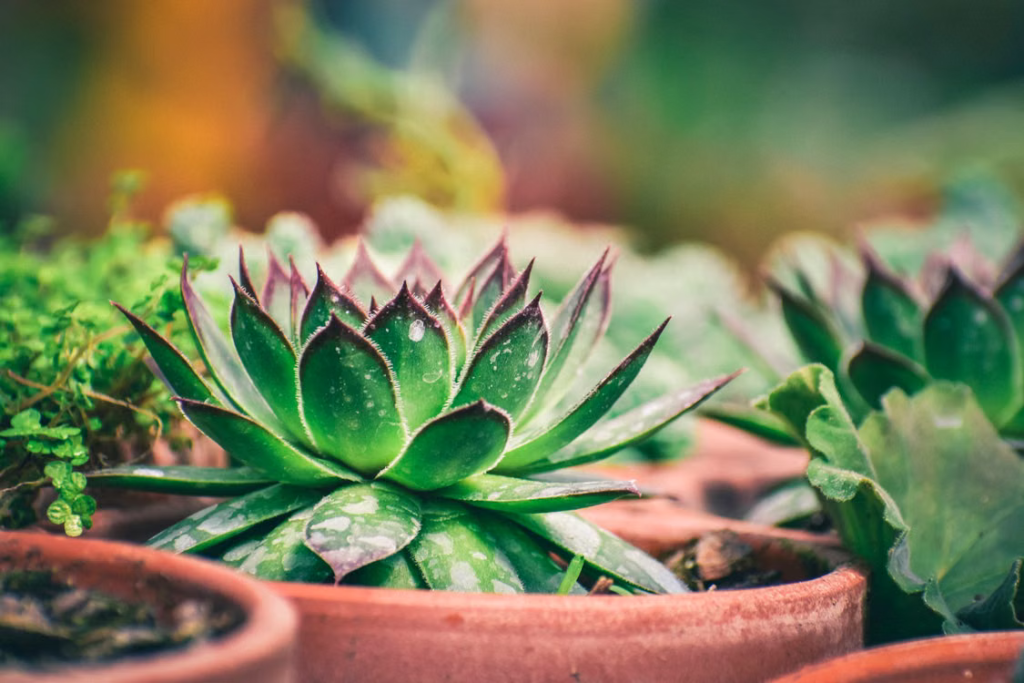
Knowing how to identify a succulent by its outline quickly narrows down the search. First, step back and assess the plant. Its shape will tell you a lot before you even touch a single leaf. Some succulents grow in flat rosettes, almost like a flattened green flower. Others hang over the edge of the pot or even stand upright in tall columns.
This alone can give you a clue. Only then should you move on to a more detailed examination of the plant.
Look Closer at the Key Features
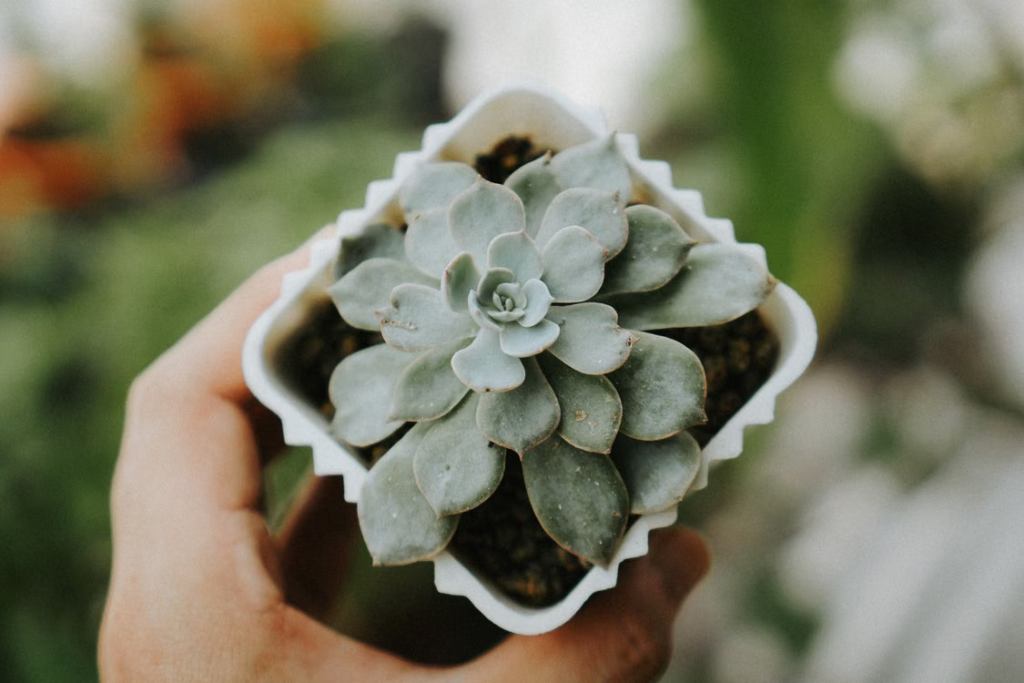
Once the shape is clear, get closer and examine the plant’s exact parts. You can identify succulents by several characteristics common to most species. Check the following:
- Leaves. See how thick they are and whether their edges are finely toothed.
- Color and coating. Look for a chalky film, a red blush, or transparent tips.
- Surface texture. Feel for hairs, bumps, spines, or a waxy sheen.
- Stems. Some have a thick, swollen stem hidden beneath. Others remain short and hidden.
- Flowers. Bloom color and stem length are very helpful.
Once you’ve secured three or four, the name usually becomes obvious.
Look at the Plant’s Growing Conditions
The climate in which a succulent grows influences its appearance. Therefore, you can identify a succulent with more confidence once you know where it grows. A plant covered in a thick layer of white powder typically grows in brightly lit, high-altitude desert areas.
This layer also serves as protection from the sun. A good example is a tough spineless rosette on a rocky slope in Mexico. This habitat alone indicates an Echeveria before you check anything else.
6 Essential Features for Identifying Succulents
Successful plant ID is never based on a single characteristic. Some features are more important for certain groups, but only their combination allows for accurate species identification.
The table below lists the succulent identification features worth considering.
| Identification Characteristic | What to Examine | Applies To |
| Growth Form | Rosette, trailing, upright, clumping, or mat-forming habit | All succulents |
| Leaves | Thickness, tip shape, margins, windows, and arrangement | Most succulents |
| Surface Coating | Farina (chalky wax), fine hairs, bumps, or a glossy skin | Many succulents |
| Stems and Caudex | Branching, thickness, or a swollen woody base | Some succulents |
| Flowers | Color, shape, and length of the bloom stalk | Most succulents |
| Habitat and Conditions | Native range, soil type, light, and elevation | All succulents |
Typical Characteristics of Succulents
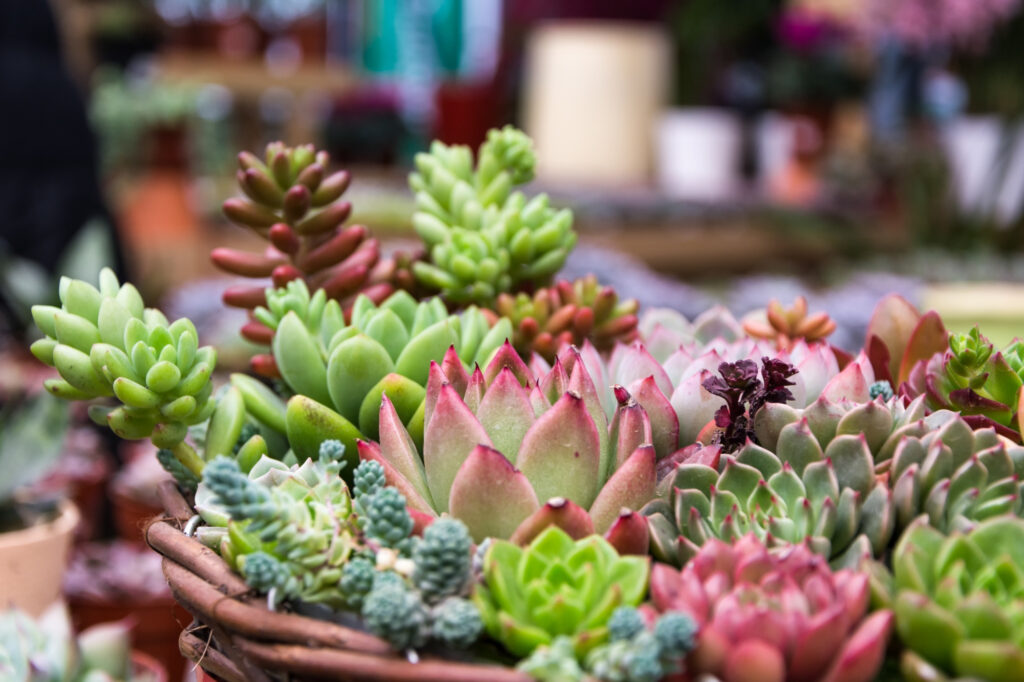
Succulents share several key traits that distinguish this group from others. This is primarily related to how they store water and survive dry weather. Here is what you see again and again:
- Thick and fleshy leaves or stems that store water
- A waxy or powdery skin that reduces moisture loss
- Shallow roots that quickly absorb water from light rain
- CAM-photosynthesis, which causes pores to open at night to conserve water
- Slow and uniform growth compared to typical leafy houseplants
All of this serves one purpose: drought management. Those plump leaves store water for weeks. The waxy skin prevents water from evaporating in hot weather. Ferns or grasses can’t do the same, so succulents survive where other plants wither.
Simple Tips to Improve Succulent Identification
Even the most attentive gardeners sometimes make mistakes. A few rules will help you make accurate guesses:
- Inspect the entire plant, not just one pretty leaf.
- Check the season, as blooms and coloring change throughout the year.
- Feel the surface for wax, hairs, or bumps that you might miss.
- Pay attention to the pot and soil, as they indicate the plant’s growing climate.
- Consider at least three characteristics before deciding on a name.
Most mistakes come from hasty inspection. A stressed plant can turn red and completely confuse you. Winter dormancy reduces some species to such a degree that they barely resemble their original form. Match several characteristics.
Well-Known Succulent Varieties Across the Globe
Knowing where a succulent grows gives you a real advantage. Many species prefer a specific climate zone or biome. Information about the plant’s origin can immediately eliminate many misconceptions. Consider the local climate too as the number of suitable options quickly dwindles.
You can find the most common succulents from around the world in the following table.
| Region | Common Succulents | Typical Habitat |
| North America | Echeveria, Agave, Sedum | Deserts, rocky slopes, dry grasslands |
| South America | Echinopsis, Rhipsalis, Portulaca | Highlands, coastal scrub, rainforest canopies |
| Europe | Sempervivum, Sedum, Jovibarba | Alpine ledges, rocky meadows, old stone walls |
| Asia | Orostachys, Sinocrassula, Rosularia | Mountain slopes, dry cliffs, warm lowlands |
| Africa | Aloe, Haworthia, Lithops | Savannas, deserts, rocky outcrops |
| Australia & Oceania | Carpobrotus, Calandrinia, Disphyma | Coastal dunes, bushland, arid flats |
FAQ
What is the fastest way to identify a succulent?
Start by examining the overall shape, then inspect the leaves. These two characteristics allow you to weed out most similar plants in seconds. After that, look at the surface and any flowers to confirm your choice.
Can I identify a succulent from a photo?
Usually, you can. A clear photo of the entire plant and a close-up of a single leaf will help. Good lighting helps too. A coin in a frame will give you a reference point.
Why do my succulents change color?
Mainly due to stress — a strong sun can turn the leaves red or purple. Cool nights and dry soil also affect this. Usually, the plant is fine; it’s simply stressed, not sick.
Are all succulents cacti?
No. All cacti count as succulents. But most succulents are not cacti. Cacti sit in one family and carry areoles, those little bumps that sprout spines.
Do succulents and cacti need the same care?
Close, but not identical. Both require bright light and fast-draining soil. Some leafy succulents may need more water than desert cacti.
Explore More Plant Identification Guides

Discover the Latest Blog Posts
- Lemon Tree Care: 6 Tips for Growing a Healthy Tree
 Lemon tree care is easier when you focus on six basics: strong light, consistent watering, fast-draining soil, suitable temperatures, regular … Read more
 - Top 12 South Africa Plants: Native Flowers, Trees, and Succulents to Know
 South Africa is one of the world’s most exciting places for plant diversity. From fynbos-covered mountains to dry savannas, coastal … Read more
 - Best Trees for Landscaping
 Trees are important elements of garden design. In addition to a natural accent or background to other plants, they provide … Read more
 - 12 Best Summer Flowers For Your Garden
 A garden that loses its vibrant colors by July can be a disappointment. The secret is choosing plants that thrive … Read more