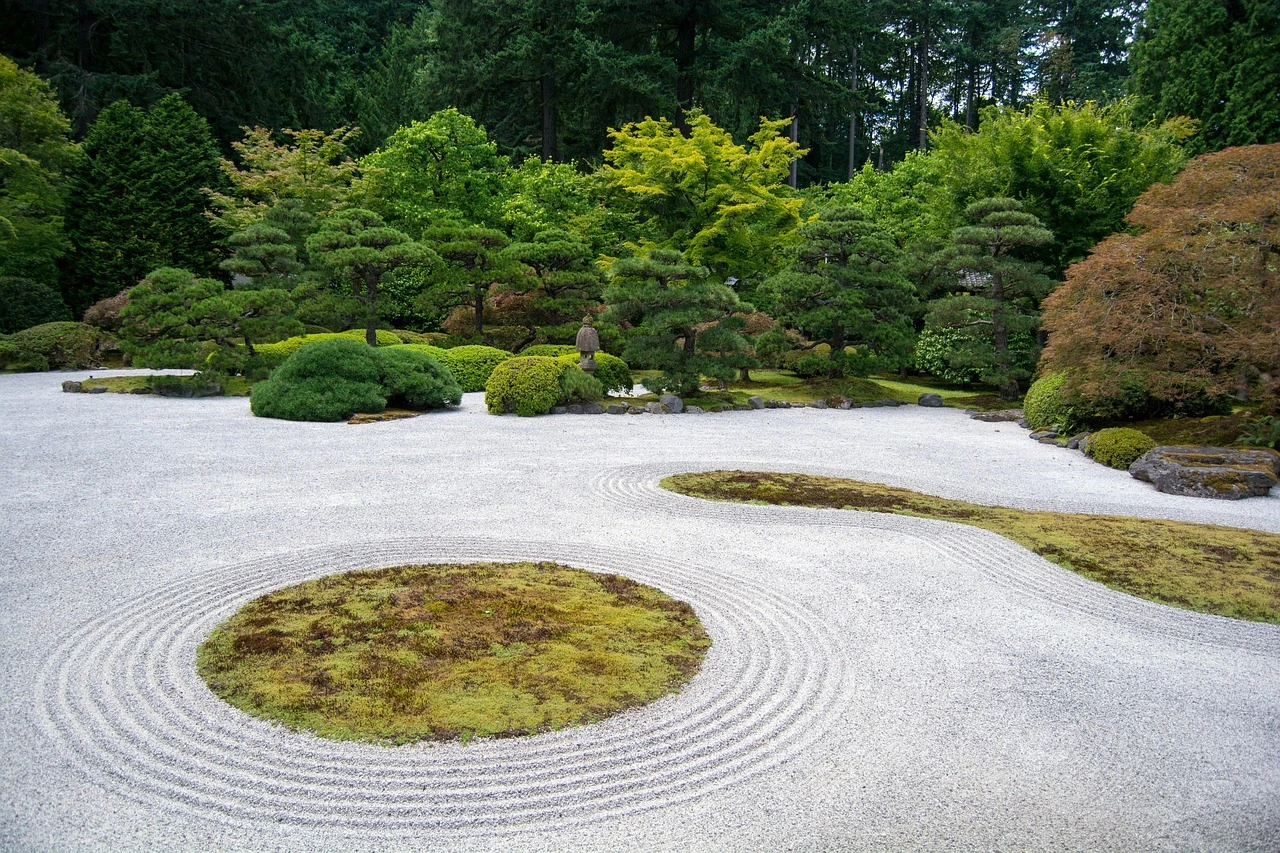
Trees are important elements of garden design. In addition to a natural accent or background to other plants, they provide shade, produce privacy, and create a cozy recreation area. The right tree can frame a walkway, soften a fence line, or support wildlife.
When choosing landscaping trees, you should not rely on appearance only. Climate, mature size, sunlight, soil type, and growth rate are significant. In this guide, you’ll find out how to choose the right tree for your property and consider 7 of the best plants for different garden needs.
Factors To Consider When Choosing a Tree
The best landscaping trees should fit both the design and the site. So, before choosing the plant, take into account the climate in which it grows, space requirements, light needs, soil preferences, growth rate, mature size, and landscape purpose.
The table below can help you narrow the choice to trees that grow well and stay attractive for years:
| Factor | Why It Matters |
| Climate zone | Helps determine whether the tree survives local winter frosts. |
| Soil type | Drainage, pH level, and soil density affect root development and health. |
| Sun exposure | Some trees grow well in full sun conditions, while others thrive in shade areas. |
| Growth rate | Fast-growing trees provide shade sooner, but may require more frequent pruning and maintenance. Slow-growing species are easier to manage over time. |
| Mature size | The mature tree should fit into the available space without interfering with roofs, power lines, and walkways. |
| Landscape purpose | Shade, privacy atmosphere, wildlife support, or bright accent. |
Start tree selection by matching the plant to the place. This approach helps reduce stress, disease problems, and unnecessary maintenance.
The Best 7 Landscaping Trees
1. Red Maple
This shade tree for landscaping is known for its classic rounded canopy, tiny red flowers in spring, and brilliant red leaves in autumn. It is perfectly adaptable to full sun and partial shade conditions as well as chalk, clay, loam, and sand, and well-drained soils. You can plant Red Maple in a medium or large yard as a seasonal color accent.
- Mature Size: 30 m tall, more than 8 meters wide
- USDA Hardiness Zones: 3-9
- Sun Requirements: Full sun to partial shade
- Growth Rate: Medium to fast
- Best For: Shade, fall color, front yards, large lawns
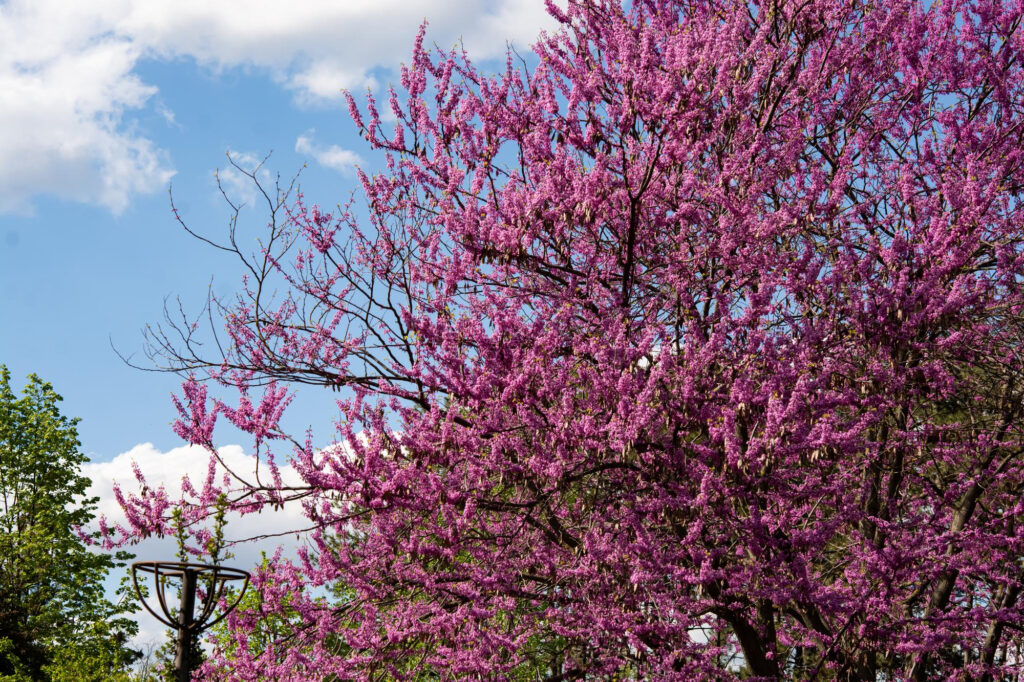
2. Eastern Redbud
The small ornamental tree is easily recognized by rose-pink to lavender spring flowers that appear before the leaves. It can thrive in moderately fertile clay or sandy soil with any pH level as well as in full sun and partial shade conditions.
Eastern Redbud can work as a specimen in a pollinator garden or as a part of mass planting to create beautiful spring colors.
- Mature Size: 8-12 meters tall, 4-8 meters wide
- USDA Hardiness Zones: 4-9
- Sun Requirements: Full sun to partial shade
- Growth Rate: Medium
- Best For: Spring flowers, small yards, pollinator gardens, mass planting for spring effect
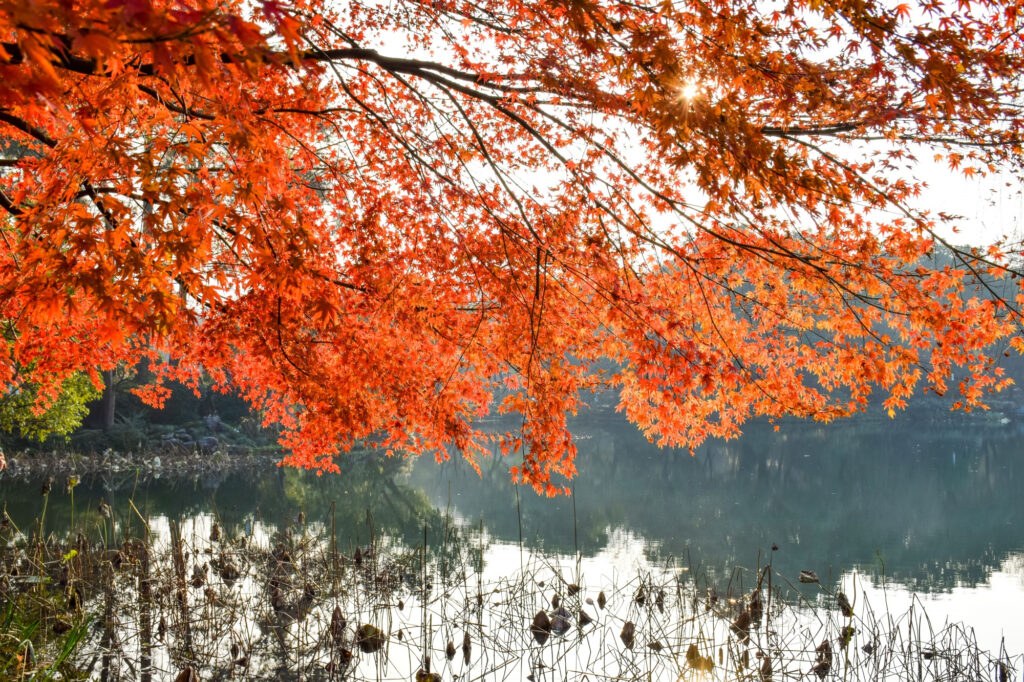
3. Japanese Maple
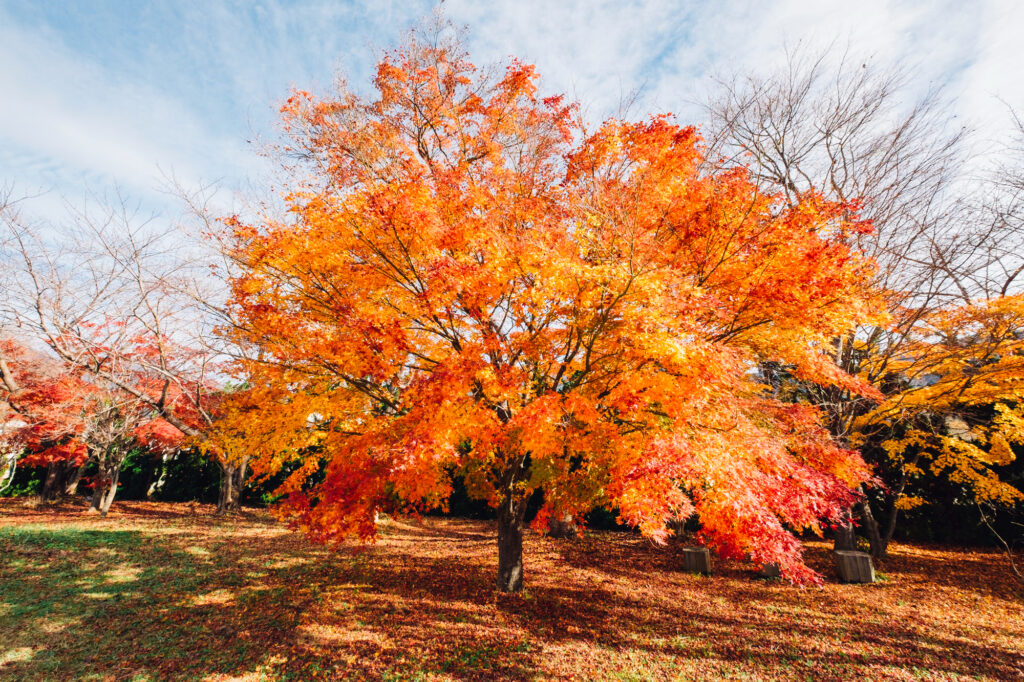
Japanese maple is a good choice for creating an Asian atmosphere in the garden thanks to its graceful branching, serrated leaves, winged seeds, and red, orange, purple, or green foliage depending on the cultivar.
This tree grows well in moist, well-drained soil in an area with partial shade. Japanese Maple is a perfect option for decorating courtyards and entry gardens.
- Mature Size: 4-8 meters tall and wide
- USDA Hardiness Zones: 5-8
- Sun Requirements: Partial shade to full sun in cooler climates
- Growth Rate: Slow to medium
- Best For: Small gardens, focal points, patios, Japanese-style landscapes
4. Serviceberry
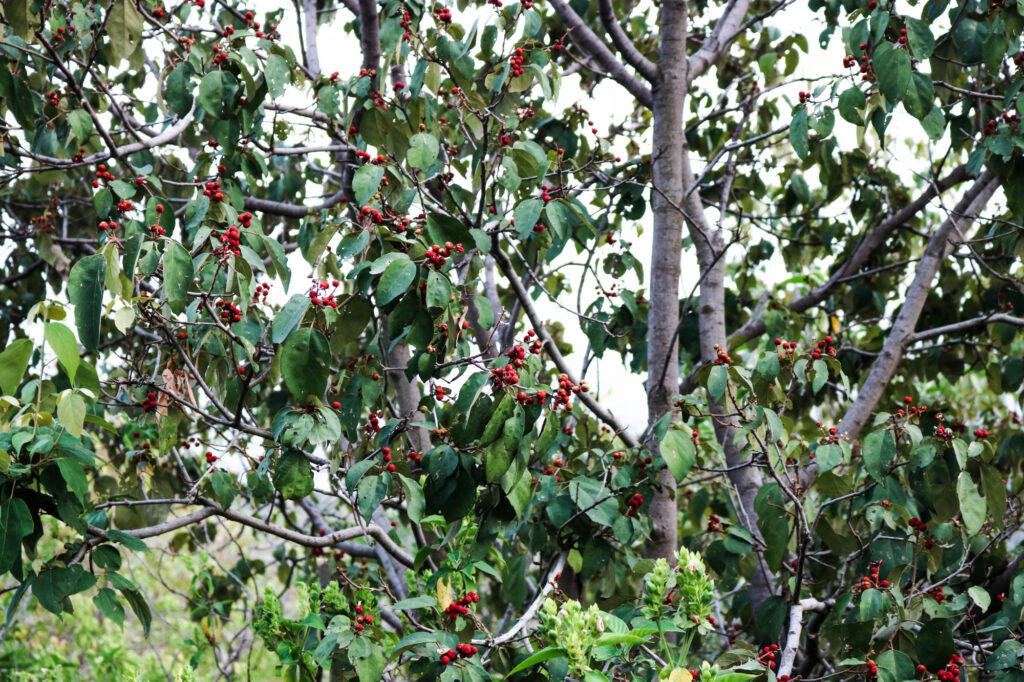
In the spring, this small tree produces tiny white star-shaped flowers that turn into sweet bluish-black or reddish-purple berries in summer. In the fall, it attracts attention with yellow, orange, and red leaves. Serviceberry can tolerate a wide range of soils, from clay to sand.
It requires full sun or partial shade and pruning in fall. Use this tree for a small yard, as a natural fence, or for autumn decoration.
- Mature Size: 4-8 meters tall, 2.5-4 meters wide
- USDA Hardiness Zones: 4-9
- Sun Requirements: Full sun to partial shade
- Growth Rate: Medium
- Best For: Small yards, seasonal interest, natural borders
5. Magnolia
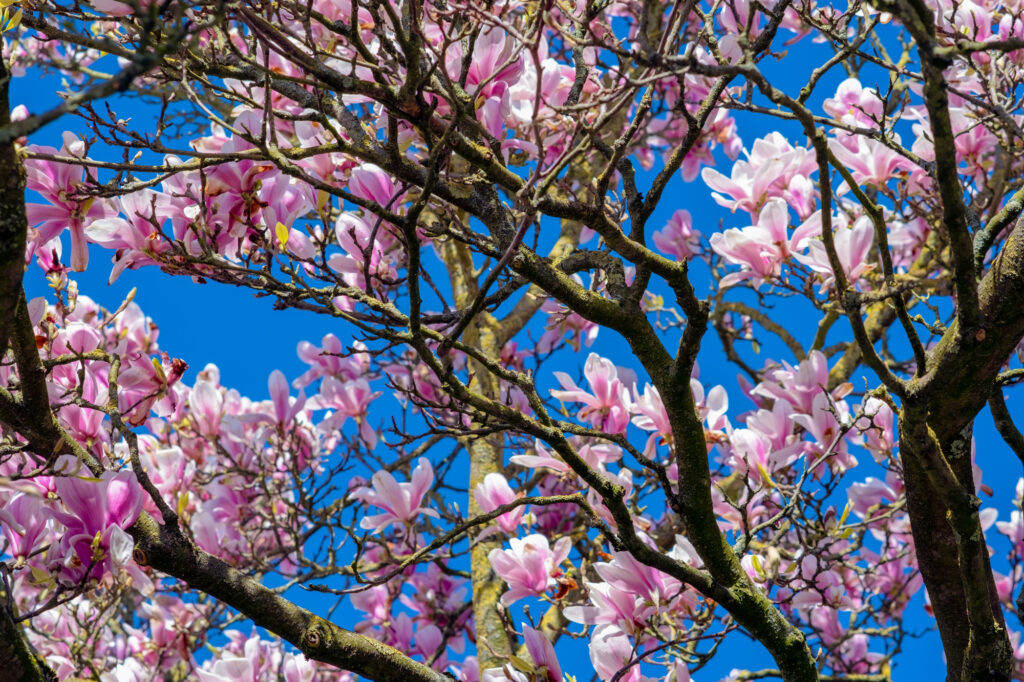
Magnolia is known for large pink or white flowers whose shape resembles a goblet, bowl, or star. This tree grows well in any fertile, moist, well-drained soil in a place with full sun to partial shade.
It tolerates drought and requires pruning in late winter. Compact magnolia cultivars are best suited for smaller gardens, while larger types are better suited to places where there is enough room for their mature canopy.
- Mature Size: 20-37 meters tall, depending on species
- USDA Hardiness Zones: 4-9
- Sun Requirements: Full sun to partial shade
- Growth Rate: Slow to medium
- Best For: Flowering compositions, front yards, Southern gardens
6. American Holly
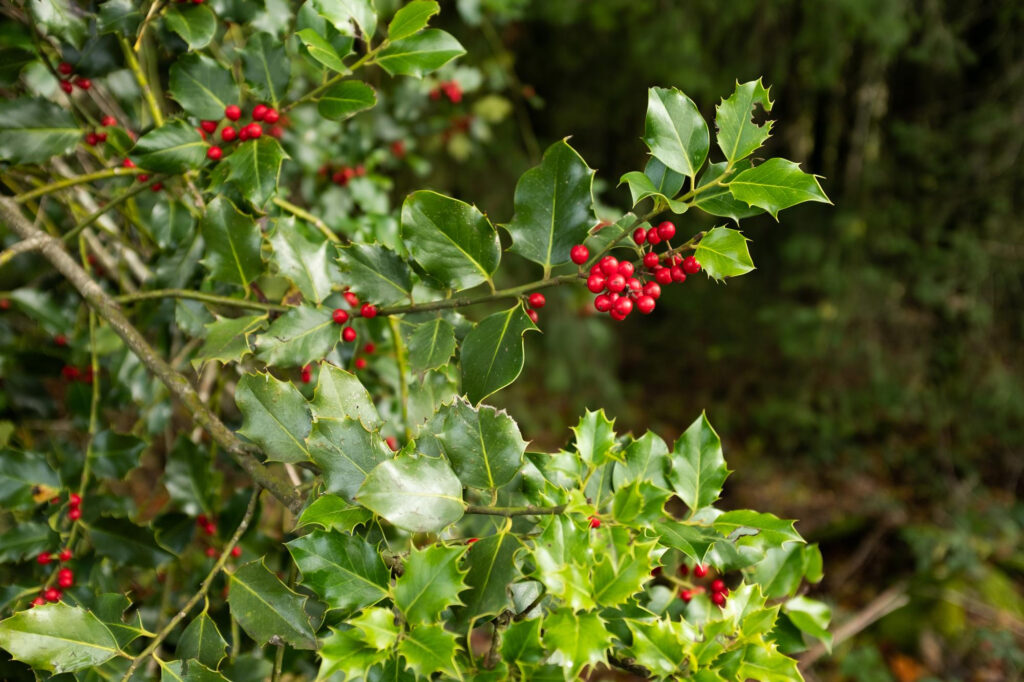
The decorative feature of this evergreen tree lies in its white flowers that are produced at the end of spring, which turn into red, orange, or yellow berries in the autumn.
American Holly requires moist soil, full sun to partial shade, and the presence of a male pollinizer nearby. This tree adds year-round privacy screens.
- Mature Size: 12-18 meters tall, 3-6 meters wide.
- USDA Hardiness Zones: 5-9
- Sun Requirements: Full sun to partial shade
- Growth Rate: Slow to medium
- Best For: Evergreen screening
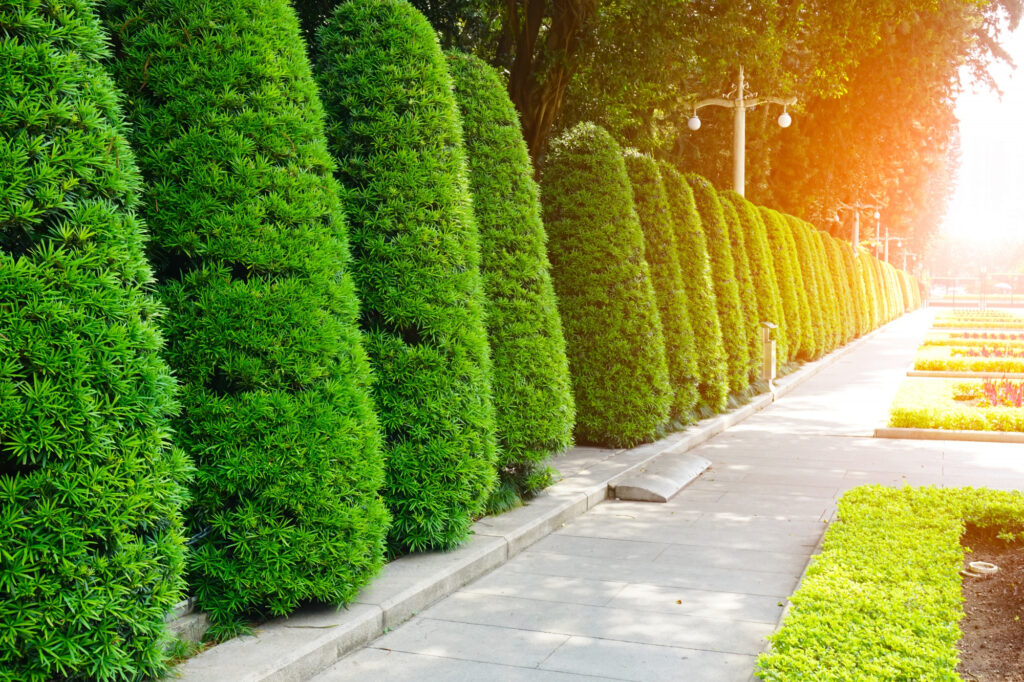
7. Arborvitae
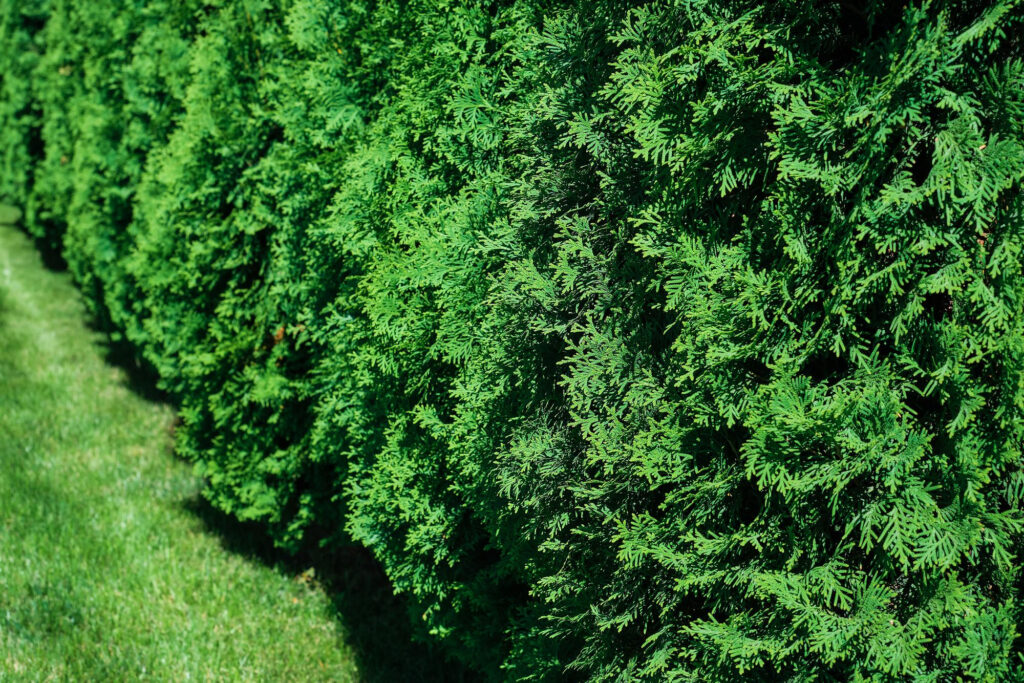
This is not usually a shade tree, but it is highly valuable for structure and enclosure. The narrow evergreen requires enough space to allow airflow and prevent overcrowding as the trees mature.
Arborvitae is perfectly suitable for creating natural screens, privacy hedges, and property borders.
- Mature Size: 0.9 meters to over 18 meters tall, depending on cultivar
- USDA Hardiness Zones: 3-8
- Sun Requirements: Full sun to partial shade
- Growth Rate: Medium
- Best For: Privacy screens, narrow spaces
How to Choose the Right Landscaping Tree: Useful Tips
The right tree for your garden matches both the site conditions and the design goal:
- If you have a small front yard, pay attention to compact trees, such as Japanese maple, serviceberry, or eastern redbud.
- For a larger property, it’s best to choose red maple or magnolia.
- To create the privacy atmosphere, an evergreen option such as arborvitae or American holly is the best choice.
- For seasonal beauty, flowering and fall-color trees create stronger visual change throughout the year.
When comparing options, focus on long-term fit. A tree that looks small at planting may eventually spread across a driveway, shade out a garden bed, or grow too close to the house.
The most reliable approach is to identify the purpose first, then choose a tree that fits the space, climate, and maintenance level.
FAQ
What are the best trees for landscaping a small yard?
Japanese maple, eastern redbud, and serviceberry are the best options for small yards. These trees are not too large for residential spaces.
Which landscaping trees grow fast?
Red maple and some Arbovite cultivars grow fast. This feature is useful for shade or screening, but it may require more pruning and careful maintenance.
What trees provide the best shade?
Red maple and larger magnolia species can provide good shade when planted in suitable spaces for creating a cozy relaxation zone.