
Learning to identify a herb is easier when you know which features deserve attention. Leaves and aroma may provide the first clues, but stem structure, flowers, growth habit, habitat, and even season can help separate similar-looking plants.
This guide introduces an approach to herb identification, whether you are examining basil in a garden bed, mint spreading through a container, or an unfamiliar herb growing outdoors. Instead of relying on a single characteristic, compare several visible traits and use them together to narrow down the possibilities.
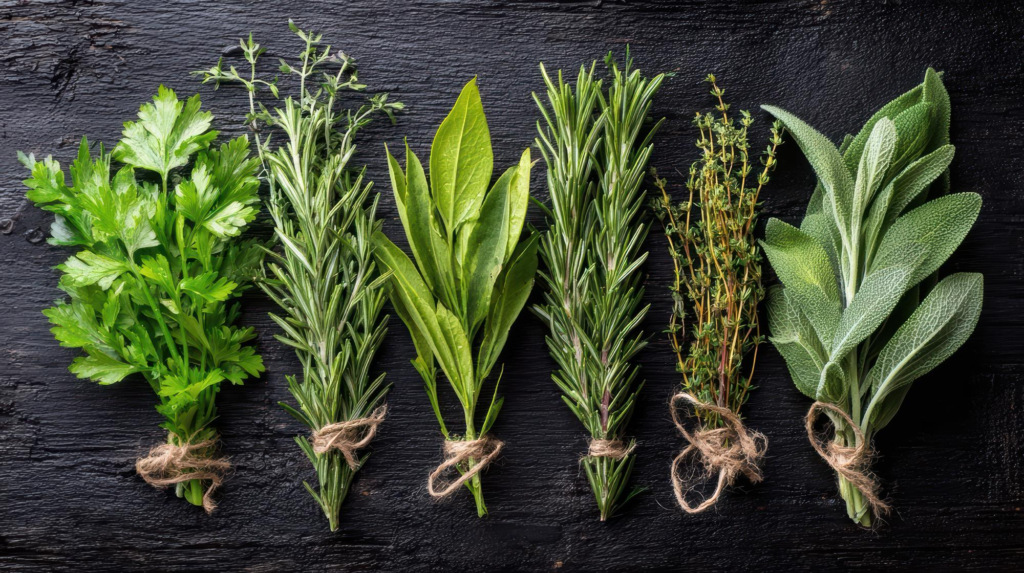
Check the Whole Plant First
If you are wondering how to identify herbs, begin by looking at the entire plant. Identification becomes more reliable when observations move from broad characteristics to finer details.
Look at Its Shape and Growth Pattern
First, observe how the plant grows. Is it upright, spreading, creeping, bushy, or forming a compact clump? Estimate its height and spread and note whether stems emerge from one central point or branch repeatedly.
Growth habit can quickly narrow the search. Mint, for example, often spreads through underground rhizomes, while many upright herbs develop a more defined central structure. The University of Minnesota Extension notes that culinary herbs come from multiple plant families with distinctly different growth habits.
Read the Details in Leaves, Stems, and Flowers
Next, identify herbs by leaves, stems, flowers, aroma, and growth habit.
Check:
- whether leaves are opposite, alternate, or clustered;
- leaf shape, margins, texture, and venation;
- whether stems are round, angular, smooth, or hairy;
- flower color, shape, and arrangement;
- fragrance released when the foliage is gently handled.
Aromatic foliage is especially useful with many members of the mint family, but scent alone should never be the deciding characteristic.
Use Location as Supporting Evidence
Where a plant grows can help confirm or question an identification. Consider sunlight, moisture, soil conditions, climate, elevation, and geographic region.
Distribution databases such as Plants of the World Online can be useful for checking whether a suspected species naturally occurs in a particular part of the world. Kew’s database includes taxonomic, distribution, trait, and identification information for vascular plants worldwide.

5 Clues That Build a Stronger Identification
So, what is herb identification in practical terms? It is the process of comparing several botanical characteristics until the available evidence points toward a likely genus or species.
| Identification clue | What to examine |
| Growth habit | Upright, creeping, spreading, clumping, or bushy form |
| Leaves | Shape, size, margins, arrangement, venation, and texture |
| Stems | Shape, branching, thickness, hairs, and surface texture |
| Flowers | Color, symmetry, shape, clusters, flowering period |
| Habitat | Soil, moisture, sunlight, climate, and geographic distribution |
Why Herbs Can Look Surprisingly Different
“Herb” is a practical term, not a single botanical family. Plants commonly described as herbs belong to many unrelated groups.
Two especially familiar groups are Lamiaceae, the mint family, and Apiaceae, the carrot family. Lamiaceae includes basil, mint, rosemary, thyme, sage, oregano, and lavender, while Apiaceae includes parsley, dill, cilantro, fennel, and chervil.
As a result, there is no universal herb shape. Some have woody stem bases, others remain soft and herbaceous; some produce broad leaves, while others have narrow or finely divided foliage. This diversity is why identification should be based on several botanical clues.
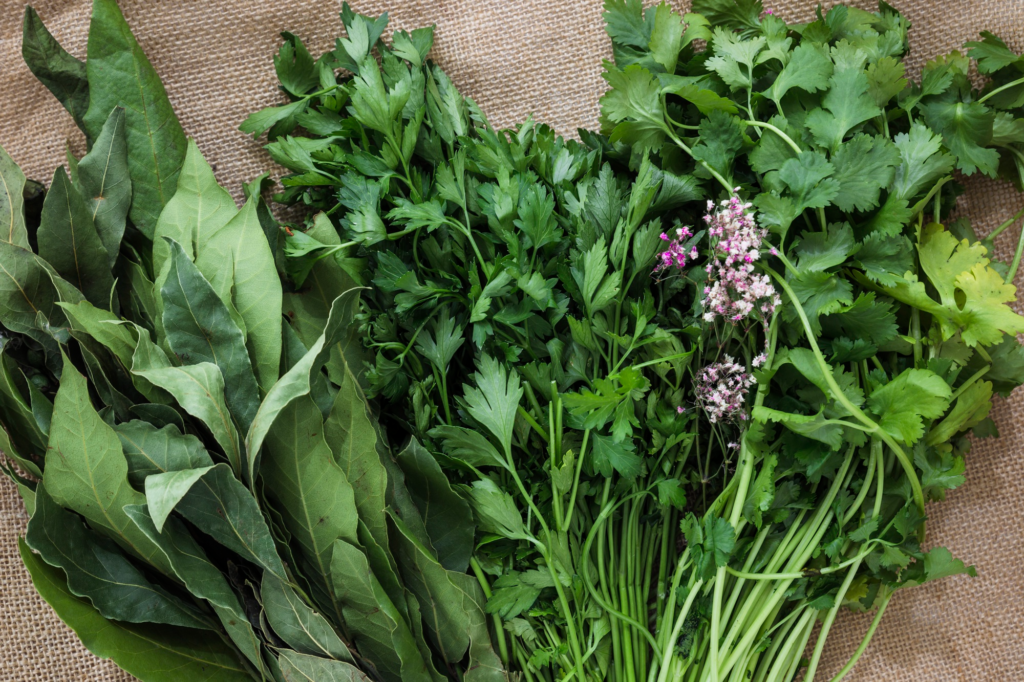
Small Habits That Improve Identification Accuracy
A few simple practices can make plant identification more dependable:
- Examine the whole plant before focusing on individual leaves.
- Compare several characteristics rather than trusting color or scent alone.
- Look at mature leaves as well as young growth.
- Check flowers or fruits when they are available.
- Record the habitat and location where the plant is growing.
- Compare your observations with reputable botanical records.
Scientific names are especially useful because common names can vary between regions. Avoid consuming an unfamiliar wild plant based only on visual resemblance. Look-alike species can share obvious characteristics while differing in important ways.
Herbs You May Encounter in Different Parts of the World
Geography provides another valuable identification filter. A species’ native range, climate preferences, and habitat can help reduce the number of plausible matches. Resources such as Kew’s Plants of the World Online allow plants to be searched by name and geographic location.
The following examples illustrate widely known herbs associated with different regions and growing traditions rather than defining exclusive native ranges.
| Region | Familiar herbs | Growing environments |
| North America | Bee balm, sage, mint | Meadows, gardens, woodland edges |
| South America | Stevia, epazote, lemon verbena | Subtropical areas, open ground, gardens |
| Europe | Thyme, oregano, parsley | Meadows, dry slopes, cultivated ground |
| Asia | Holy basil, cilantro, lemongrass | Tropical to temperate gardens and fields |
| Africa | African basil, coriander, fenugreek | Grasslands, cultivated areas, warm climates |
| Australia & Oceania | Native mint, anise myrtle, lemon myrtle | Forest margins, bushland, subtropical areas |
FAQ
Can I identify an herb from its leaves alone?
Sometimes leaves provide a strong clue, but they rarely provide the most reliable confirmation. Stem structure, flowers, fragrance, growth habit, and habitat should also be examined whenever possible.
Does smell reliably identify an herb?
Aroma can narrow the possibilities, particularly among strongly scented culinary herbs, but different species may produce similar fragrances. Use scent as one characteristic among several.
Why does the same herb look different at different times of year?
Plant appearance changes with growth stage and season. Young foliage may differ from mature leaves, and flowers, fruits, or dormant growth may appear only during particular periods.
Are common names enough for identification?
Not always. One common name can refer to different plants in different regions. A scientific name provides a more precise way to confirm genus and species.
Explore More Plant Identification Guides

Discover the Latest Blog Posts
- Lemon Tree Care: 6 Tips for Growing a Healthy Tree
 Lemon tree care is easier when you focus on six basics: strong light, consistent watering, fast-draining soil, suitable temperatures, regular … Read more
 - Top 12 South Africa Plants: Native Flowers, Trees, and Succulents to Know
 South Africa is one of the world’s most exciting places for plant diversity. From fynbos-covered mountains to dry savannas, coastal … Read more
 - Best Trees for Landscaping
 Trees are important elements of garden design. In addition to a natural accent or background to other plants, they provide … Read more
 - 12 Best Summer Flowers For Your Garden
 A garden that loses its vibrant colors by July can be a disappointment. The secret is choosing plants that thrive … Read more