
To identify which grasses you have, look beyond basic green blades and examine specific structural details. Whether managing a lawn, restoring native land, or studying local botany, learning to identify a grass species depends on recognizing key physical traits.
Grasses belong to the Poaceae family, which is one of the largest and most widespread plant families on Earth. Because many species look nearly identical at first glance, knowing what grass identification is and how it works helps you narrow down your options. Use this guide to master grass identification using plant structures, growth habits, and habitat context.

A Step-by-Step Guide to Grass Identification
Identifying true grasses requires a step-by-step check of the plant’s structure. Instead of relying on color or height, which change with seasons and weather, focus on these steady physical features to learn how to identify a grass specimen correctly.
Step 1: Observe the Overall Appearance
Start by looking at the plant’s overall shape and growth pattern. Grasses generally grow in one of two ways: bunchgrasses (also known as clumping) or running grasses (also known as sod-forming).
The first type grows in tight, distinct tufts or mounds. The second one spreads out horizontally via underground stems (rhizomes) or aboveground runners (stolons) to create a continuous mat. Checking whether a plant forms an isolated clump or a broad carpet cuts your list of potential species in half right away.
Step 2: Examine the Main Identification Features
To identify grasses by leaf sheath, ligule, and collar zone details, look at where the leaf blade joins the main stem:
- Stems (also known as culms). True grass stems are usually round or flattened in cross-section, hollow between joints, and feature swollen nodes. Sedges have triangular stems, while rushes have round, solid stems without joints.
- Leaves. Blades are narrow with parallel veins. Check the ligule (a thin membrane or fringe of hairs inside the leaf collar) and auricles (small claw-like extensions wrapping the stem).
- Flowering heads. Seed heads made of individual spikelets confirm the exact species. Look at whether the cluster forms a tight spike, a branched raceme, or an open, bushy panicle.
Paying attention to these features can help you to identify grass species and differentiate the types you have in your garden and beyond.
Consider the Growing Environment
You should not underestimate where grass grows, as it gives immediate clues. Soil moisture, sun level, soil type, and regional climate filter out unlikely matches. A species adapted to wet marshlands rarely appears on dry, rocky roadside slopes.
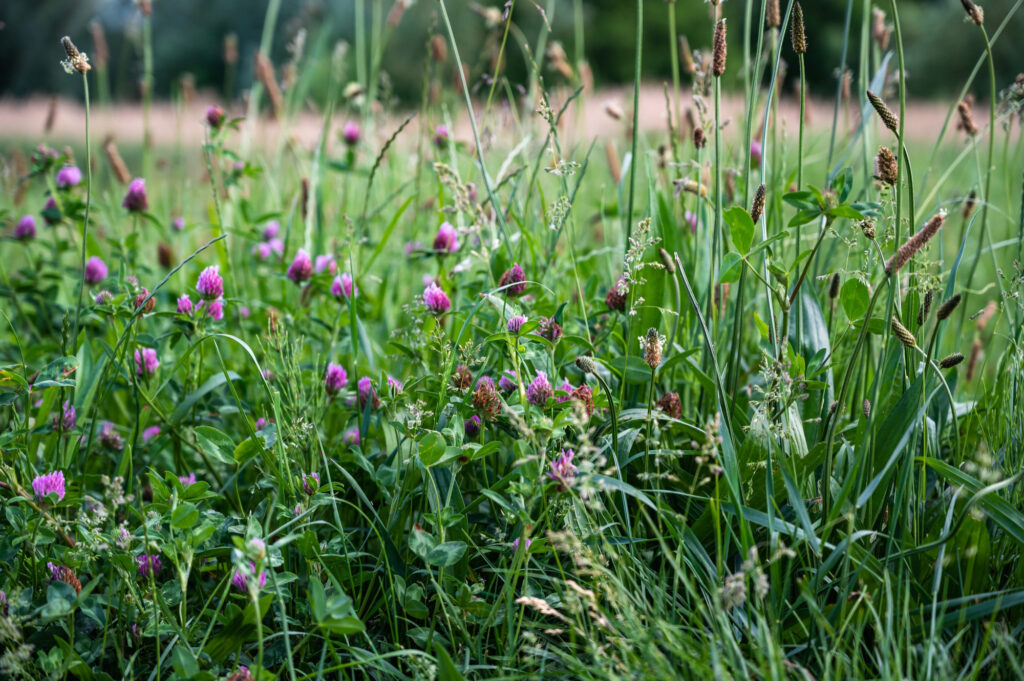
5 Key Features to Spot to Identify Grasses
Field identification relies on checking a few primary traits together rather than looking at just one feature in isolation. Keeping an eye on all the nuances might be challenging, but you can always double-check with a plant identification app like Botan.
Look at a handy table to simplify the identification process.
| Identification Characteristic | What to Examine | Applies To |
| Growth Form | Overall plant type, growth habit, life form, and structure | All plant groups |
| Leaves or Foliage | Shape, size, color, arrangement, margins, venation, texture, or foliage type | Most plant groups |
| Stems, Trunks, or Shoots | Color, texture, bark, branching pattern, thickness, or stem structure | Most plant groups |
| Flowers or Reproductive Structures | Flowers, cones, catkins, spores, or other reproductive organs | Most plant groups |
| Fruits, Seeds, or Spore Structures | Fruits, berries, capsules, cones, seed pods, spores, or other reproductive bodies | Most plant groups |
| Surface Characteristics | Spines, thorns, hairs, scales, wax, needles, areoles, or other distinctive features | Most plant groups |
| Underground Structures | Roots, bulbs, tubers, rhizomes, corms, or other underground organs | Selected plant groups |
| Growth Size & Habit | Mature height, spread, climbing, trailing, upright, clumping, or creeping growth | All plant groups |
| Habitat & Growing Conditions | Habitat, soil, moisture, sunlight, elevation, ecosystem | All plant groups |
| Geographic Distribution | Native range, climate zones, geographic occurrence | All plant groups |
| Seasonal Appearance | Flowering, fruiting, dormancy, evergreen or deciduous growth, seasonal color changes | Most plant groups |
| Distinctive Features | Unique characteristics specific to each plant group | All plant groups |
Distinctive Markers of Grasses
While species vary, members of the Poaceae family share several core botanical features:
- Parallel leaf veins. Main veins run straight down the blade from base to tip.
- Two-ranked leaf setup. Leaves grow alternately on opposite sides of the stem in two clear rows.
- Open sheaths. The bottom of each leaf wraps around the stem like a split tube with overlapping edges.
- Wind pollination. Flowers don’t have colorful petals; they feature dangling anthers and feathery stigmas designed to catch wind-borne pollen.
Several plant groups resemble true grasses due to their narrow, blade-like leaves or turf-like growth but belong to entirely different botanical families. The most common ones are monkey grass, horsetail, and Western blue-eyed grass. Botanists use the phrase “Sedges have edges, rushes are round, and grasses are hollow right up from the ground” to distinguish these lookalikes.
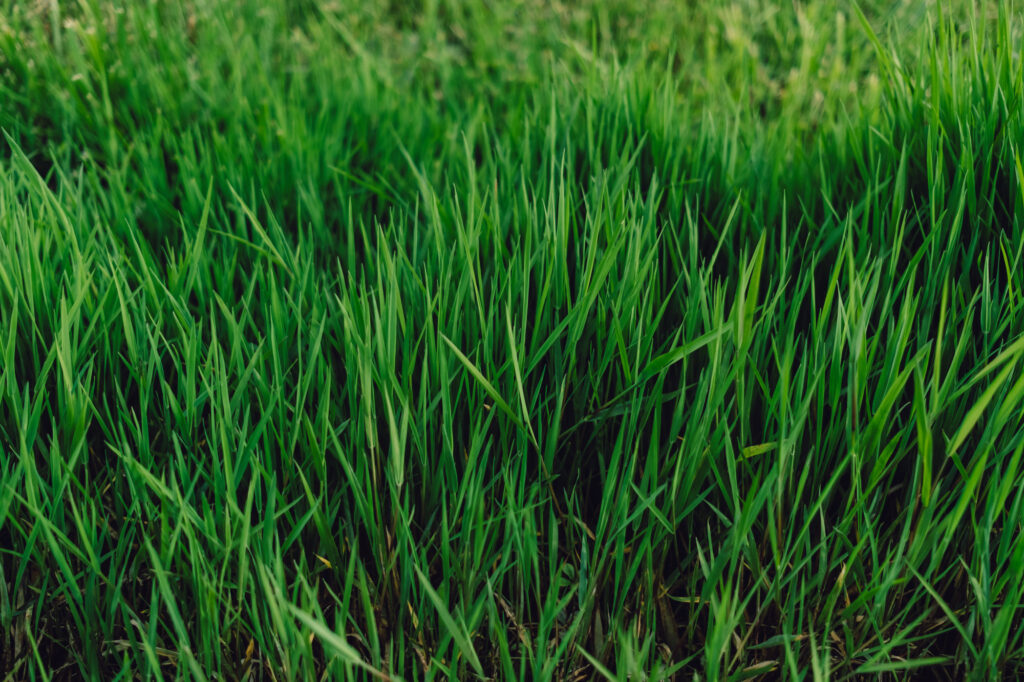
Recommendations for Grasses Identification
We gathered some practical tips on how to identify grasses and avoid the common mistakes:
- Focus on mature plants. Young shoots or freshly mowed lawn blades often lack ligules or flower heads, making accurate matching tough.
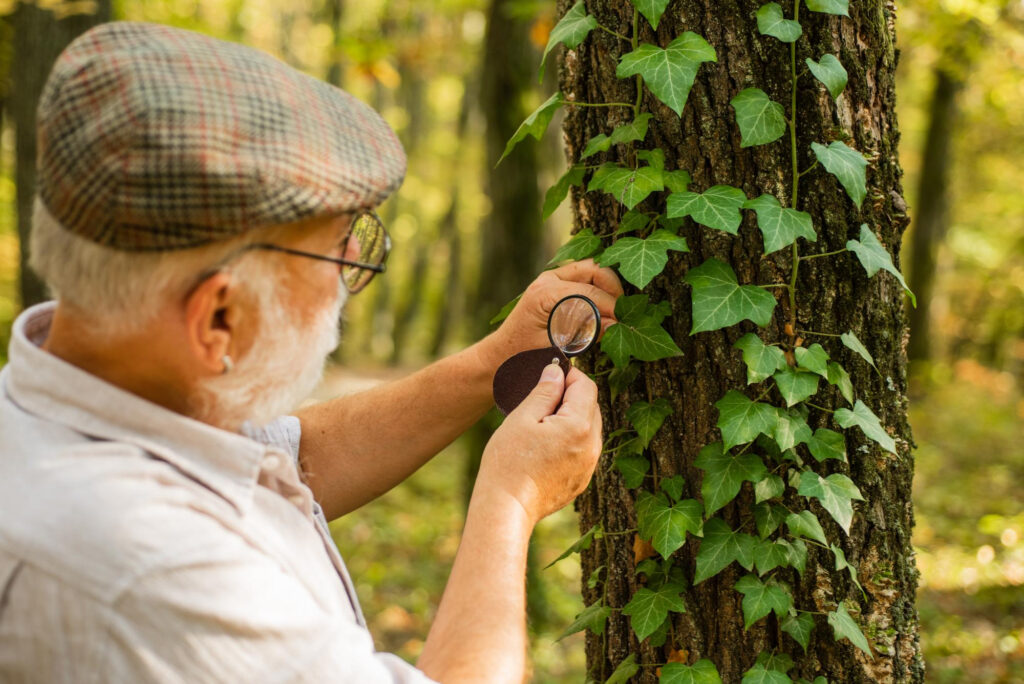
- Grab a 10x hand lens. Tiny details like ligule hair patterns, tiny hairs on the blade, or seed structures are hard to see with the naked eye.
- Check the season. Cool-season grasses, like Kentucky bluegrass or tall fescue, flower in spring, while warm-season varieties, like Bermuda grass or zoysiagrass, bloom in late summer or fall.
- Pull back the leaf blade. Peel the blade slightly away from the stem to get a clear look at the collar zone and ligule.
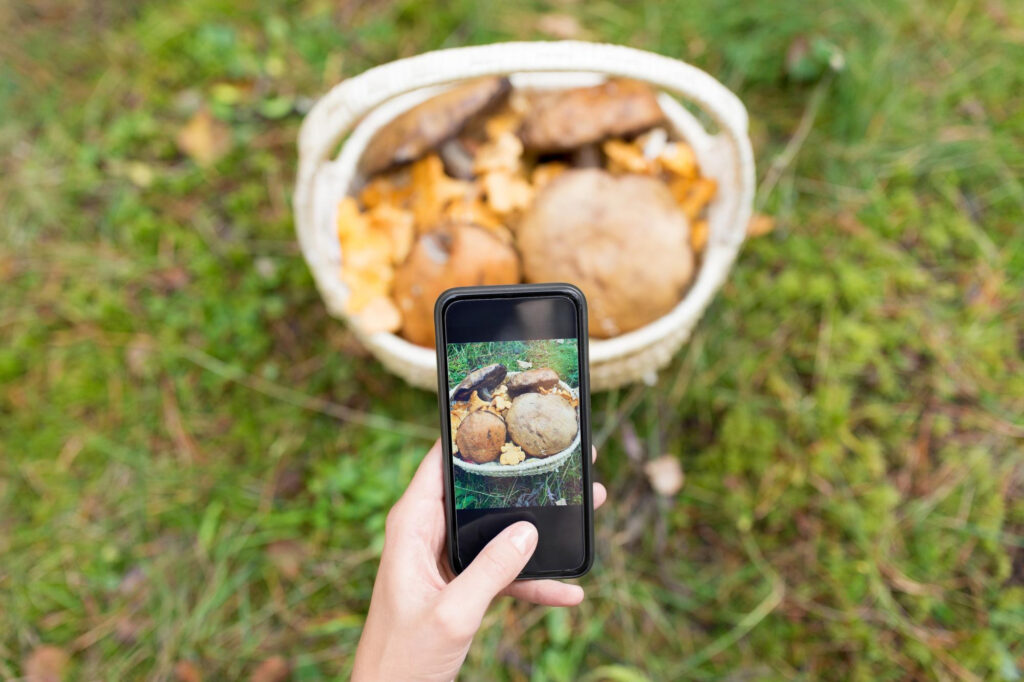
Learning to accurately identify grass takes time and a trained eye. When you are not sure about a particular species, an AI-powered plant identification tool like Botan can save you time with quick recognition based on the photo you snap.
Most Common Grasses Worldwide
Matching a specimen to its natural habitat speeds up identification. Climate zones and soil conditions determine where specific grasses thrive naturally. We gathered the most common ones for each region.
| Region | Common Grasses | Typical Habitat |
| North America | Big bluestem (Andropogon gerardii), switchgrass (Panicum virgatum), and Kentucky bluegrass (Poa pratensis) | Prairies, meadows, open woods, and lawns |
| South America | Pampas grass (Cortaderia selloana), Pará grass (Urochloa mutica), and Jaragua (Hyparrhenia rufa) | Grasslands, savannas, as well as river basins |
| Europe | Perennial ryegrass (Lolium perenne), fine fescue (Festuca rubra), and crested dog’s-tail (Cynosurus cristatus) | Pastures, lawns, and mountain meadows |
| Asia | Bamboo varieties (Bambusoideae), cogongrass (Imperata cylindrica), and miscanthus (Miscanthus sinensis) | Forests, hillsides, as well as riverbanks |
| Africa | Elephant grass (Cenchrus purpureus), Bermuda grass (Cynodon dactylon), red oat grass (Themeda triandra) | Savannas, dry scrub, and wetlands |
| Australia & Oceania | Wallaby grass (Rytidosperma spp.), kangaroo grass (Themeda triandra), spinifex (Triodia spp.) | Bushlands, dry interior areas, as well as coastal dunes |
FAQ
How can I tell grass apart from sedges and rushes?
Sedges have solid, triangular stems without jointed nodes. Rushes have solid, round stems. True grasses have round or flat hollow stems with distinct, solid joints.
Can I identify grass without a seed head?
Yes. You can identify non-flowering grass by checking vegetative traits: growth habit (clumping vs. spreading), leaf collar structures, ligule style (membranous or hairy), auricles, and blade texture.
What is a ligule and why does it matter?
A ligule is a small membrane or ring of hairs located right inside the joint where the leaf blade leaves the stem. Because its shape and texture remain consistent within a species, it is one of the best identification clues.
Explore More Plant Identification Guides
Discover the Latest Blog Posts
- Lemon Tree Care: 6 Tips for Growing a Healthy Tree
 Lemon tree care is easier when you focus on six basics: strong light, consistent watering, fast-draining soil, suitable temperatures, regular … Read more
 - Top 12 South Africa Plants: Native Flowers, Trees, and Succulents to Know
 South Africa is one of the world’s most exciting places for plant diversity. From fynbos-covered mountains to dry savannas, coastal … Read more
 - Best Trees for Landscaping
 Trees are important elements of garden design. In addition to a natural accent or background to other plants, they provide … Read more
 - 12 Best Summer Flowers For Your Garden
 A garden that loses its vibrant colors by July can be a disappointment. The secret is choosing plants that thrive … Read more