
Trees are among the most recognizable plants on Earth because of their familiar, distinguished appearance: a sturdy, woody trunk, a crown, branches, and considerable height. However, many unrelated species look similar at first glance, especially when they grow in the same forest, park, or garden.
This guide clearly explains how to identify a tree by studying its visible botanical characteristics, including leaves, bark, branching pattern, flowers, fruits, cones, growth habit, and habitat.
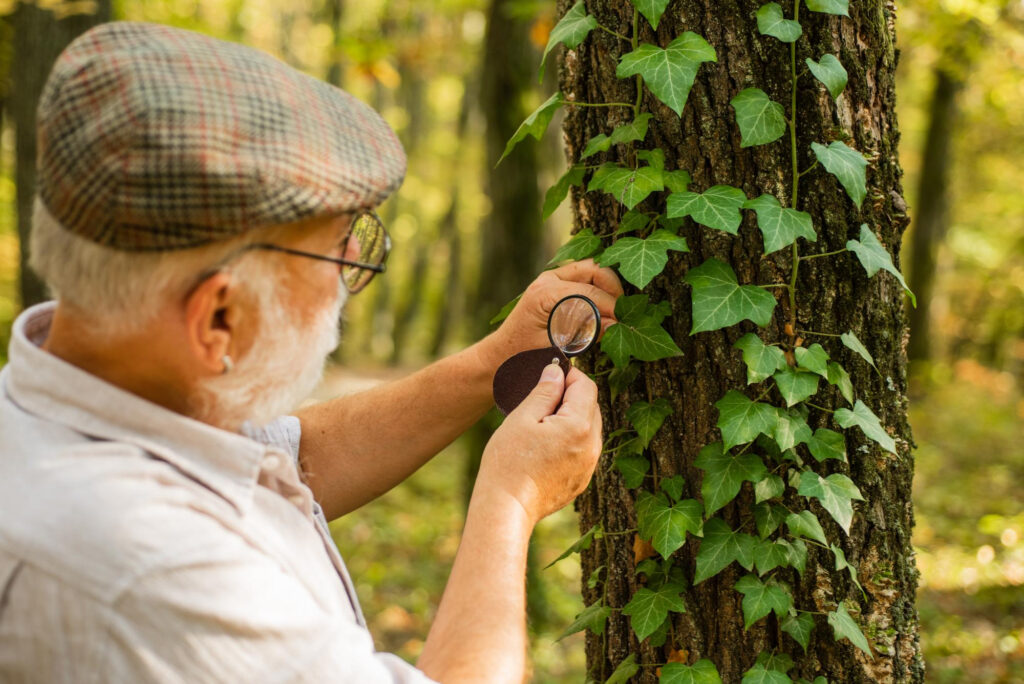
Identify Trees Step-by-Step
For accurate tree identification, begin observation with overall plant appearance, then move toward leaves, bark, and other details, as well as growing conditions. This approach is the most suitable, as some features change with season, age, or growing conditions.
Step 1: Observe the Overall Appearance
Stand a certain distance away from a plant and take a general look at it. Pay attention to its mature height, crown shape, trunk structure, and whether it grows upright, spreading, weeping, columnar, or irregular.
The overall silhouette can help narrow the options quickly; for example, tall conical trees with needles are classified as conifers, while broad-crowned plants with wide leaves are classified as hardwood species.
Step 2: Focus on Main Identification Signs
After observing the overall appearance of the plant, start to identify the tree by details. Leaf shape, margins, veins, and arrangement are the key features that often indicate which species is in front of you.
But for the most accurate result, it’s advisable to observe bark texture, flower petals, fruit color, cone shape, seed number, and nut size together rather than separately.
Step 3: Consider the Growing Environment
Habitat is an important hint that can help you recognize the tree. Look around. What kind of climate do the plants grow in? What type of soil is under your feet: moist, dry, or sandy? Does this region get a lot of sun?
For example, willows grow well near rivers, while pines prefer dry, sandy soil. Knowing the growing environment helps you to rule out many types of trees that aren’t suited to certain conditions.
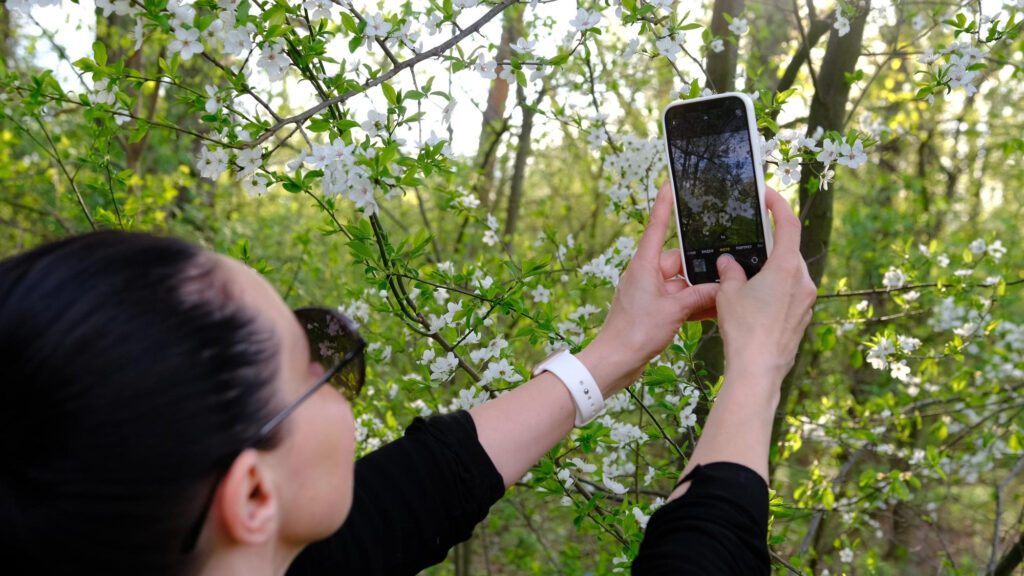
7 Key Features for Recognizing Trees to Keep in Mind
Knowing the answer to the question “What is tree identification?”, you probably want to start plant recognition immediately. But don’t hurry. First, learn carefully the key plant characteristics to look for.
Botanists who identify plants on the professional level conduct a comprehensive analysis. Depending on the species, separate characteristics may be especially useful, but the most accurate result usually comes from combining several features at once.
| Identification Feature | What to Examine | Suitable For |
| Growth form | Mature height, crown shape, branching pattern, overall growth habit. | Narrowing down the possible group. |
| Leaves or needles | Shape, size, margins, venation, arrangement, texture, and color. | Providing important clues for identifying tree species. |
| Bark and trunk | Color, texture, ridges, plates, peeling patterns, lenticels, and trunk form. | Identification when leaves, flowers, or fruits are absent. |
| Flowers, cones, or catkins | Shape, size, color, structure, arrangement, and season of appearance. | Identifying flowering trees and conifers during reproductive seasons. |
| Fruits, seeds, or nuts | Shape, size, color, surface texture, arrangement, and ripening season. | Providing clues for identifying at genus or species level. |
| Habitat and growing conditions | Soil type, moisture level, climate, elevation, light exposure, and native region. | Verifying whether the checked species is likely to grow in that location. |
| Seasonal appearance | Flowering, fruiting, dormancy, evergreen or deciduous habit, autumn color changes. | Supporting year-round tree identification. |
Common Tree Signs
When learning how to identify a tree, remember that this is a woody perennial plant, most species of which have several common features. These are mainly a single main woody trunk, branches, bark, leaves or needles, and reproductive organs. However, they vary between broadleaf species, conifers, palms, and other tree-like plants.
For example, deciduous plants shed their leaves during the autumn and winter, while evergreen plants retain foliage for longer periods. Conifers have needle-like or scale-like leaves and cones, while many broadleaf trees produce flowers followed by fruits, nuts, or winged seeds.
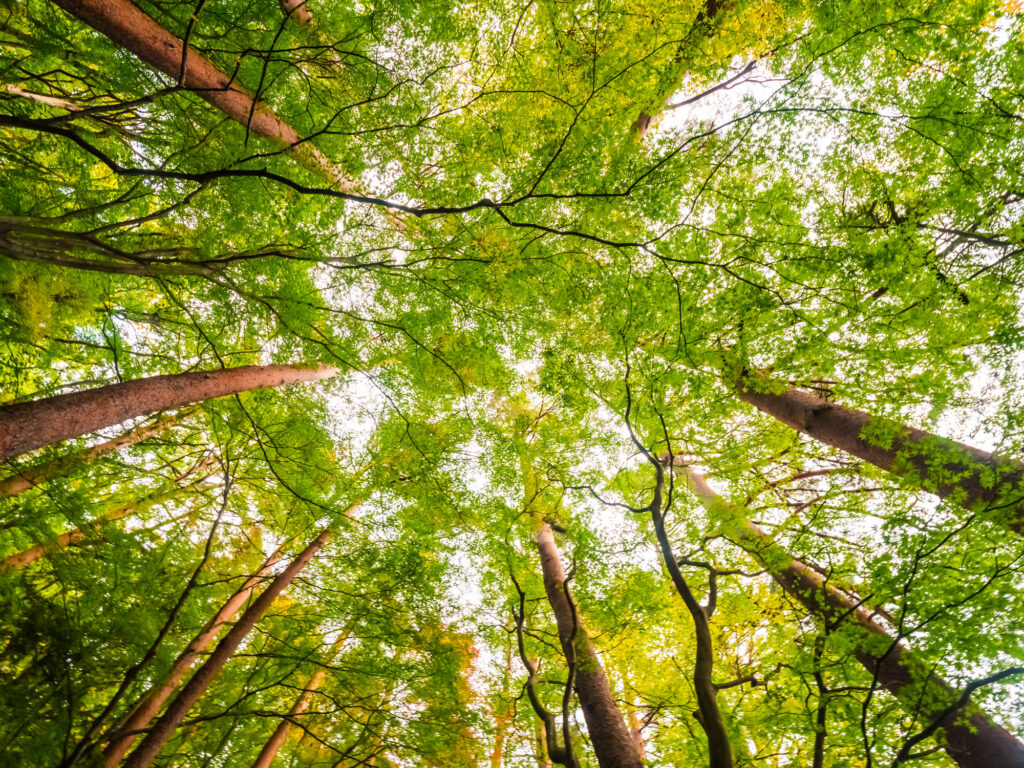
How to Make Tree Identification Accurately?
When examining an unknown tree, use these practical tips:
- Take a general look at the plant before focusing on details.
- Compare several leaves from different branches.
- Check bark on both young and mature parts of the trunk.
- Pay attention to flowers, fruits, cones, seeds, or nuts when available.
- Note the location, habitat, soil type and moisture, as well as sunlight level in your notebook.
- Revisit the tree in another season if key features are missing.
Also, pay attention to seasonality. Spring flowers, summer leaves, autumn fruits, and winter bark may all provide different identification clues.
Popular Trees Around the World
Knowing the natural growing area of trees is an important advantage during identification, which helps you to narrow the list of possible species before detailed comparison. Most species can thrive in particular climate zones, forest types, elevations, or continents only.
The table below includes examples of common trees found in different parts of the world. It may serve as a good hint for you, along with visual features.
| Region | Common Trees | Typical Habitat |
| North America | Red maple, white oak, eastern white pine, evergreen sequoia. | Temperate forests, wetlands, mountain regions, and urban landscapes. |
| South America | Brazil nut, rubber tree, Cítiba. | Amazon rainforests, tropical savannas, subtropical regions. |
| Europe | English oak, silver birch, European beech, Norway spruce. | Temperate woodlands, mixed and coniferous forests, mountain regions. |
| Asia | Japanese maple, ginkgo, dedar cedar. | Temperate forests, mountain regions, and urban landscapes. |
| Africa | Baobab, acacia. | Savannas, dry woodlands, semi-arid regions, and tropical forests. |
| Australia & Oceania | Eucalyptus, kauri, Norfolk Island pine. | Bushlands, coastal forests, and subtropical rainforests. |
FAQ
What is tree identification?
This is the process of recognizing a tree by comparing its overall appearance, leaves, bark, branches, and other visual features along with geographic range.
What is the easiest way to identify a tree?
Start identifying with the overall appearance, then focus on its leaves or needles. Confirm the result with bark, fruit, flowers, and habitat.
Can I identify a tree by bark only?
Bark itself is not a key feature that allows for 100% identification of the plant. It changes with age: in young plants it may be smooth while in mature plants it is rougher.
How do I identify a tree without leaves?
In winter, when the plants are usually without leaves, pay attention to bark, buds, branching pattern, cones, nuts, and overall shape.
Explore More Plant Identification Guides

Discover the Latest Blog Posts
- Lemon Tree Care: 6 Tips for Growing a Healthy Tree
 Lemon tree care is easier when you focus on six basics: strong light, consistent watering, fast-draining soil, suitable temperatures, regular … Read more
 - Top 12 South Africa Plants: Native Flowers, Trees, and Succulents to Know
 South Africa is one of the world’s most exciting places for plant diversity. From fynbos-covered mountains to dry savannas, coastal … Read more
 - Best Trees for Landscaping
 Trees are important elements of garden design. In addition to a natural accent or background to other plants, they provide … Read more
 - 12 Best Summer Flowers For Your Garden
 A garden that loses its vibrant colors by July can be a disappointment. The secret is choosing plants that thrive … Read more