
Aquatic plant identification becomes easier when you compare several clues instead of relying on one leaf or flower. To identify an aquatic plant, start with its position in the water, then compare growth form, foliage, stems, flowers, and rooting habit.
This guide shows how to identify an aquatic plant through observable features and habitat context, so you can understand why a specimen fits a particular group.
Aquatic Plant Identification Step-by-Step
If you are wondering what aquatic plant identification involves, think of it as a process of narrowing possibilities. Begin with the whole species, move to smaller structures, and then check whether the habitat and geographic range support your conclusion.
Start With the Plant’s Position in the Water
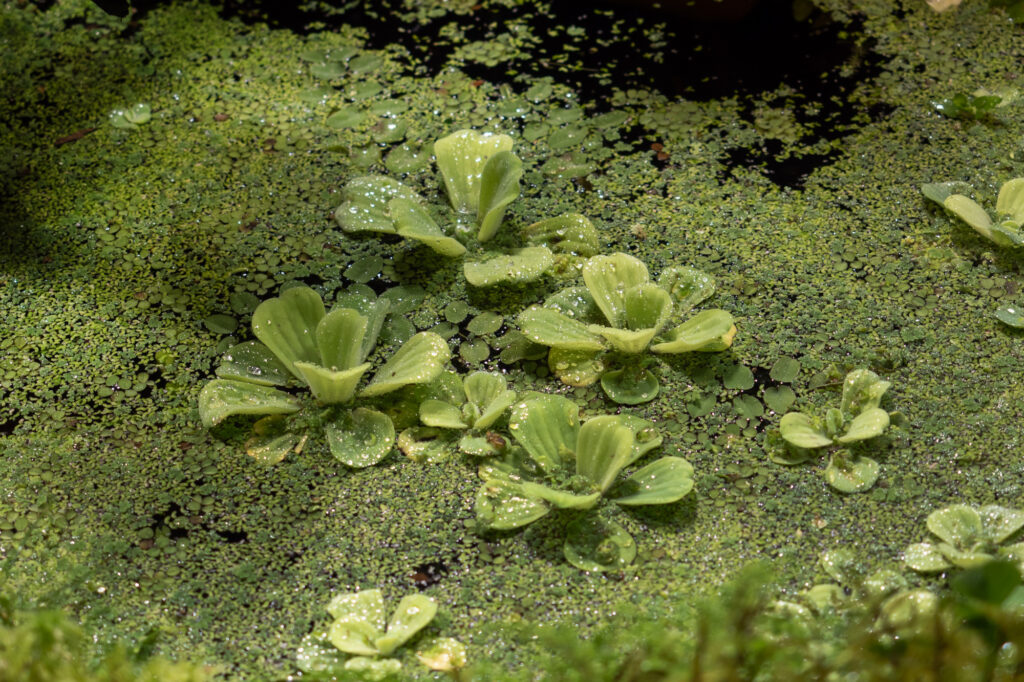
First, observe the species without disturbing it. Is it completely submerged, rooted with leaves floating on the surface, free-floating, or emerging above shallow water? These growth forms are among the fastest ways to narrow the field.
The U.S. National Park Service overview of freshwater plants describes the same useful distinction between submerged, floating, and emergent vegetation.
Compare Leaves, Stems, Flowers, and Roots
Next, identify the aquatic plant by its structural details. Note whether leaves are opposite, alternate, whorled, divided, ribbon-like, round, or heart-shaped. Check whether stems are flexible or stiff enough to stand above water.
Flowers, seed heads, rhizomes, and floating rosettes can be highly diagnostic. Record several features before choosing a species name, because leaf shape may change above and below the surface.
Use Habitat as a Confirmation Clue
Finally, look at water depth, current, clarity, substrate, light, and whether the plant grows in a pond, lake, stream, marsh, or shoreline zone. Habitat does not identify a species on its own, but it can rule out poor matches.
The Royal Horticultural Society’s aquatic plant guidance also separates pond species by growing position and water depth, showing why location is a practical identification clue.
5 Diagnostic Clues That Matter Most in Aquatic Plant ID
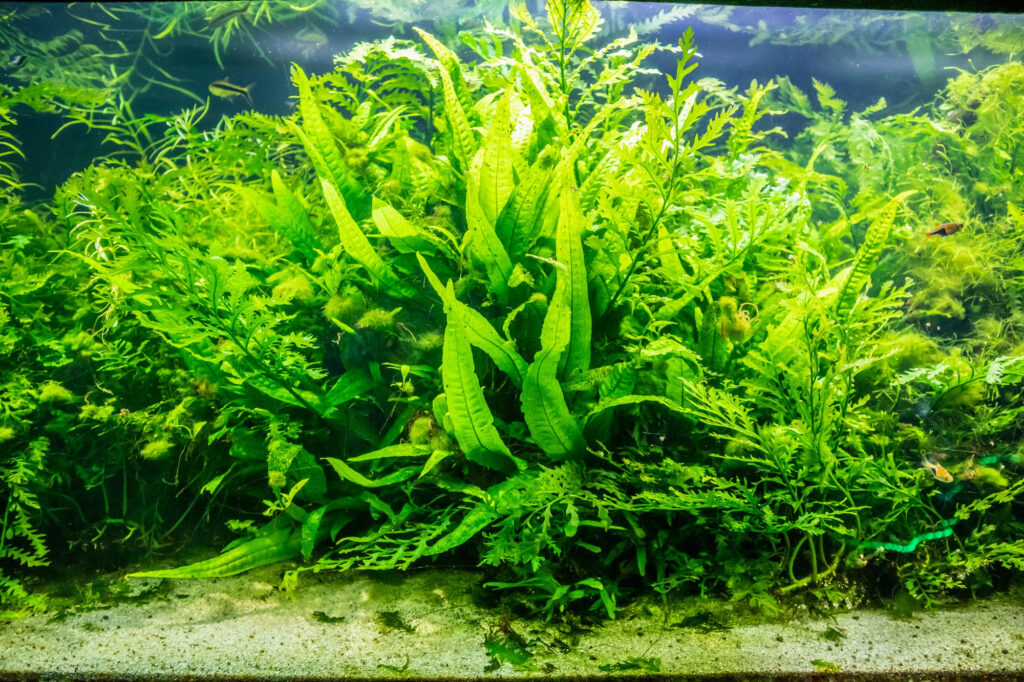
Reliable identification comes from combining multiple characteristics. For aquatic species, the plant’s relationship to the water is especially important, but leaf structure, reproductive features, anchoring method, and habitat often provide the evidence needed to distinguish similar-looking types.
| Clue to Check | What to Record | Why It Helps |
| Water position | Submerged, surface-floating, free-floating, or emergent | Rapidly narrows the growth-form group |
| Leaf architecture | Shape, division, arrangement, texture, and whether leaves differ above and below water | Useful for separating visually similar genera |
| Stem and anchoring | Flexible or rigid stems; rooted in sediment, rhizomatous, or unattached | Shows how the plant occupies its aquatic niche |
| Flowers and fruit | Flower position, petal number, inflorescence type, seed or fruit form | Often provides the strongest species-level clues |
| Site conditions | Water depth, flow, substrate, light, season, and local range | Helps confirm whether an identification is ecologically plausible |
What Aquatic Plants Often Have in Common
Aquatic plants are not one botanical lineage; they include species from many families adapted to life in or beside water. Common traits include flexible submerged leaves, air-filled tissues, floating leaf blades, and sturdy emergent stems. Some root in sediment, while others float freely. Because similar adaptations evolved in different groups, unrelated species can look surprisingly alike.
Practical Ways to Avoid Misidentification
A quick glance is rarely enough. Use a repeatable routine and document features before removing or handling the plant.
- Photograph the whole plant in place, then take close-ups of leaves, stems, flowers, fruits, and the point where it meets the water or sediment.
- Check both submerged and aerial leaves when present; one species can produce noticeably different foliage in different conditions.
- Use flowers and fruits when available, but do not ignore vegetative clues outside the flowering season.
Finally, confirm scientific names and native ranges with an authoritative database such as Kew’s Plants of the World Online before treating geography as supporting evidence.
Aquatic Plant Examples From Major World Regions
Biogeography can improve identification. Many aquatic species have natural ranges tied to particular climates and freshwater systems, although cultivation and invasive spread can place them elsewhere. Use the examples below as reference points, then compare morphology and verify local occurrence.
| Region | Representative Aquatic Plants | Habitats to Check |
| North America | American white waterlily (Nymphaea odorata); pickerelweed (Pontederia cordata); broadleaf arrowhead (Sagittaria latifolia) | Ponds, lake margins, marshes, slow water |
| South America | Amazon water lily (Victoria amazonica); water hyacinth (Pontederia crassipes); Cabomba aquatica | Warm floodplains, quiet freshwater, slow streams |
| Europe | White waterlily (Nymphaea alba); yellow waterlily (Nuphar lutea); broad-leaved pondweed (Potamogeton natans) | Lakes, canals, ponds, slow rivers |
| Asia | Sacred lotus (Nelumbo nucifera); water chestnut (Trapa natans); Hydrilla verticillata | Shallow lakes, ponds, marshes, slow-flowing water |
| Africa | Blue waterlily (Nymphaea caerulea); papyrus (Cyperus papyrus); Cape pondweed (Aponogeton distachyos) | Wetlands, lake edges, river margins, seasonal waters |
| Australia & Oceania | Giant waterlily (Nymphaea gigantea); ribbonweed (Vallisneria australis); nardoo (Marsilea mutica) | Billabongs, ponds, rivers, shallow wetlands |
FAQ
What is aquatic plant identification and where should I start?
Start with its growth position: submerged, floating-leaved, free-floating, or emergent. This immediately reduces the number of likely groups before you inspect finer details.
Can I identify an aquatic plant by leaves alone?
Sometimes, but leaf shape can be variable and similar across unrelated species. Combine leaf features with stem structure, flowers or fruit, rooting habit, habitat, and location whenever possible.
Why can the same aquatic plant have different-looking leaves?
Some species produce different leaf forms depending on whether the leaves develop underwater, at the surface, or in air. This plasticity helps the plant function under changing water levels.
Does location matter when identifying water plants?
Yes. Native range, climate, and ecosystem can support or weaken a possible identification. However, introduced and invasive populations mean geography should confirm morphology, not replace it.
When is the best time to identify aquatic plants?
The growing and flowering season usually provides the most visible characters. If flowers are absent, document vegetative features carefully and revisit the plant later if possible.
Discover the Latest Blog Posts
Discover the Latest Blog Posts
- Lemon Tree Care: 6 Tips for Growing a Healthy Tree
 Lemon tree care is easier when you focus on six basics: strong light, consistent watering, fast-draining soil, suitable temperatures, regular … Read more
- Top 12 South Africa Plants: Native Flowers, Trees, and Succulents to Know
 South Africa is one of the world’s most exciting places for plant diversity. From fynbos-covered mountains to dry savannas, coastal … Read more
- Best Trees for Landscaping
 Trees are important elements of garden design. In addition to a natural accent or background to other plants, they provide … Read more
- 12 Best Summer Flowers For Your Garden
 A garden that loses its vibrant colors by July can be a disappointment. The secret is choosing plants that thrive … Read more