
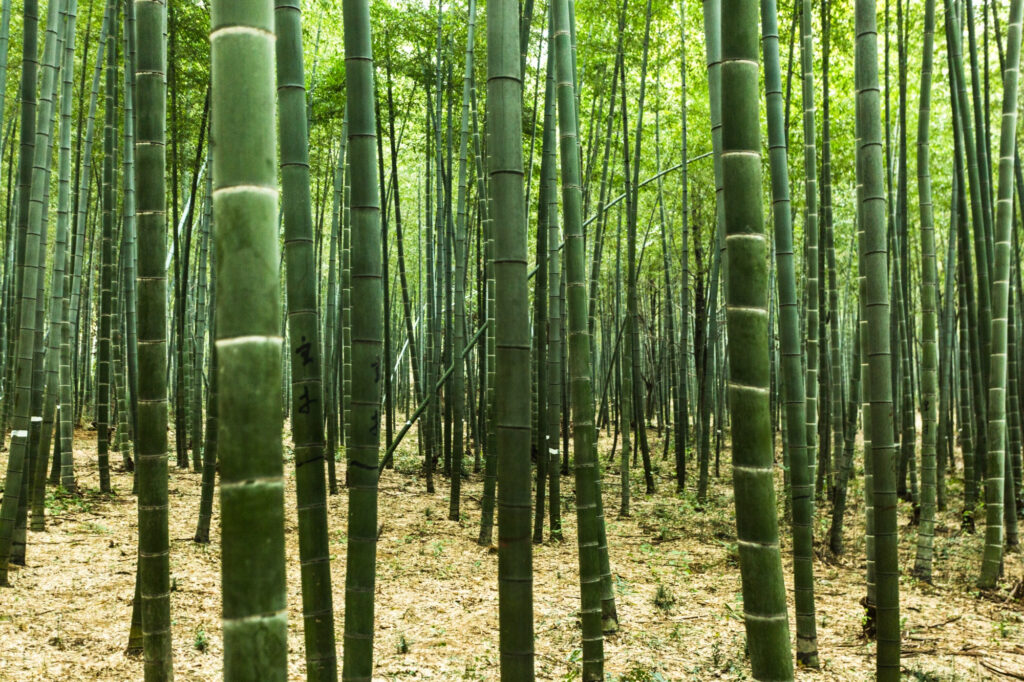
To recognize bamboo, begin with its jointed stems, narrow leaves, and the way its shoots emerge from the ground. Some species form tight clusters; others spread into broad stands. These differences matter for both accurate naming and practical garden decisions.
Bamboo identification uses several visible clues rather than a single trait. This guide explains the sequence of observation, compares diagnostic features, and introduces regional examples to help you narrow down possible species.

How to Identify Bamboo in the Field
If you are wondering how to identify a bamboo plant, examine its overall shape first, then look closely at the stems and branch connections. Record where it grows before comparing species descriptions.
Look at the Stand and Its Silhouette
Stand a few steps away and check height, stem spacing, and density. A tightly packed cluster suggests a clumping growth habit, while stems emerging at wider intervals may indicate a running type. Notice whether canes arch outward or remain upright and whether foliage is concentrated near the upper branches.
Inspect Canes, Nodes, and Leaves
You can identify bamboo by its most useful visible features, compare the following details:
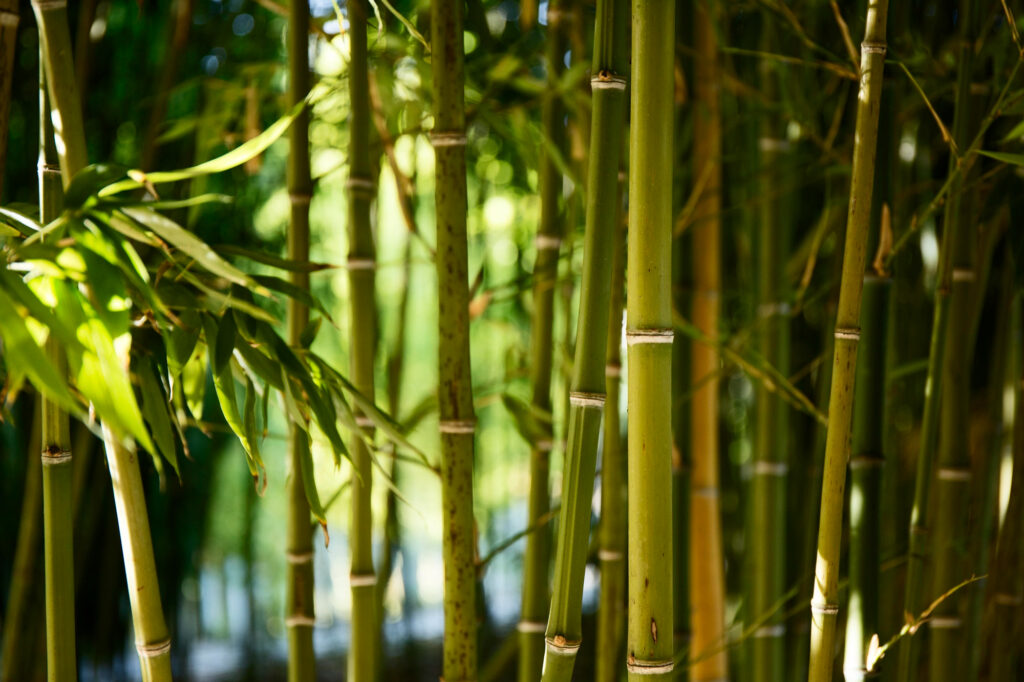
- Culms: Note color, thickness, surface texture, and whether the stems are grooved.
- Nodes and internodes: Inspect the raised joints and the segments between them.
- Branches: Count branches at a node and observe their relative sizes.
- Leaves and sheaths: Check blade shape, size, and the protective sheaths on young shoots.
The University of Georgia Cooperative Extension guide explains terms such as culm, node, sheath, and rhizome that are also useful for recognition.
Use Habitat as a Cross-Check
Consider temperature, rainfall, soil drainage, and whether the plant is wild or cultivated. Several tropical species grow in humid environments. Some temperate plants tolerate colder winters. A planted specimen may occur far outside its native range, so habitat supports—but does not prove—an identification.
6 Diagnostic Characteristics of Bamboo
The strongest identification comes from matching multiple structural details. These six features provide a practical checklist, especially when the plant is not flowering.
| Characteristic | What to Observe | Identification Value |
| Culm shape | Diameter, color, grooves, upright or arching stems | Helps distinguish genera and cultivars |
| Nodes | Raised joints, rings, branching at nodes | Useful for separating similar canes |
| Branching pattern | Number and arrangement of branches per node | Often important at genus level |
| Leaves | Blade width, length, texture, and arrangement | Supports identification of mature plants |
| Culm sheaths | Color, hairs, shape, and when they fall | Especially useful on new shoots |
| Rhizome habit | Short clumping versus long running rhizomes | Reveals how a stand expands |
What Sets Bamboo Apart From Other Grasses?
Bamboos belong to the grass family, Poaceae. Many develop woody, segmented culms with solid nodes and often hollow internodes, although some species have thick-walled or nearly solid stems. New culms emerge from underground rhizomes and generally reach their full diameter without later thickening like tree trunks.
Two major growth patterns are useful in gardens: clumping types keep new culms relatively close to the parent plant, while running types can send shoots farther away. The University of Maryland Extension overview of bamboo structure and spread explains these patterns and why certain running species require careful management.
Flowering is not a dependable everyday clue: some species flower only after long, irregular intervals. The shape of the culms, foliage, and sheaths is usually easier to assess.
Tips for a More Reliable Identification
These simple tips will help you recognize bamboo:
- Photograph a complete culm, its joints, and at least one leafy branch.
- Record the color of new shoots and keep a fallen culm sheath for comparison.
- Check whether shoots arise close together or at a distance; avoid digging up established plants unnecessarily.
- Compare scientific names and native ranges, not just common names.
For a tentative visual match, Botan can help compare clear plant photographs. Confirm difficult cases using several structural features and a botanical reference rather than relying on an image alone.
Bamboo Species Across Different Regions
Native distribution helps reduce the list of possibilities. Species adapted to tropical forests, seasonally dry woodland, or temperate river corridors may look different, but horticulture has moved numerous bamboos beyond their original ranges.
The examples below distinguish naturally occurring plants from introduced ornamental plantings.
| Region | Representative Bamboo | Typical Habitat / Status |
| North America | Arundinaria gigantea | Native in southeastern U.S. floodplains and moist woodlands |
| South America | Guadua angustifolia | Native in tropical northern South America |
| Europe | Phyllostachys aurea | Introduced; grown in gardens, sometimes naturalized |
| Asia | Bambusa vulgaris | Native from Assam to southern China and Indochina; wet tropics |
| Africa | Oxytenanthera abyssinica | Native in seasonally dry tropical and southern Africa |
| Australia & Oceania | Bambusa arnhemica | Native to the Northern Territory, Australia |
For geographic confirmation, consult Kew’s account of Guadua angustifolia and its record of the Australian native Bambusa arnhemica. These references distinguish native ranges from introductions.
FAQ
What is bamboo identification?
It is the process of recognizing a plant using its culms, nodes, branches, foliage, rhizome habit, and geographic context. Species-level identification may require more detailed shoot and sheath features.
How can I tell running bamboo from clumping bamboo?
Look at the spacing of newly emerging culms and, where visible, their rhizome pattern. Running bamboos often send shoots farther from the main stand; clumping ones tend to form denser groups.
Do bamboo stems keep getting thicker?
A newly emerged culm generally retains approximately the diameter it develops at emergence. Later shoots from a maturing stand may be taller and thicker than earlier ones.
Can leaf shape alone identify a bamboo species?
Usually not reliably. Leaf sizes overlap among species, so also compare stem grooves, branch patterns, culm sheaths, and growth habit.
Is lucky bamboo actually bamboo?
No. This plant is Dracaena sanderiana, a different monocot plant whose cane-like stems resemble bamboo superficially.
Explore More Plant Identification Guides

Discover the Latest Blog Posts
- 6 Best Planting Calendar Apps
 Timing is half of gardening. Sow too early, and a late frost wipes out your seedlings; sow too late, and … Read more
- What Is Napa Cabbage and How to Grow It
 Napa cabbage is a popular leafy vegetable known for its tender texture, mild flavor, and crisp white stems. It is … Read more
- Lemon Tree Care: 6 Tips for Growing a Healthy Tree
 Lemon tree care is easier when you focus on six basics: strong light, consistent watering, fast-draining soil, suitable temperatures, regular … Read more
- Top 12 South Africa Plants: Native Flowers, Trees, and Succulents to Know
 South Africa is one of the world’s most exciting places for plant diversity. From fynbos-covered mountains to dry savannas, coastal … Read more
- Best Trees for Landscaping
 Trees are important elements of garden design. In addition to a natural accent or background to other plants, they provide … Read more